
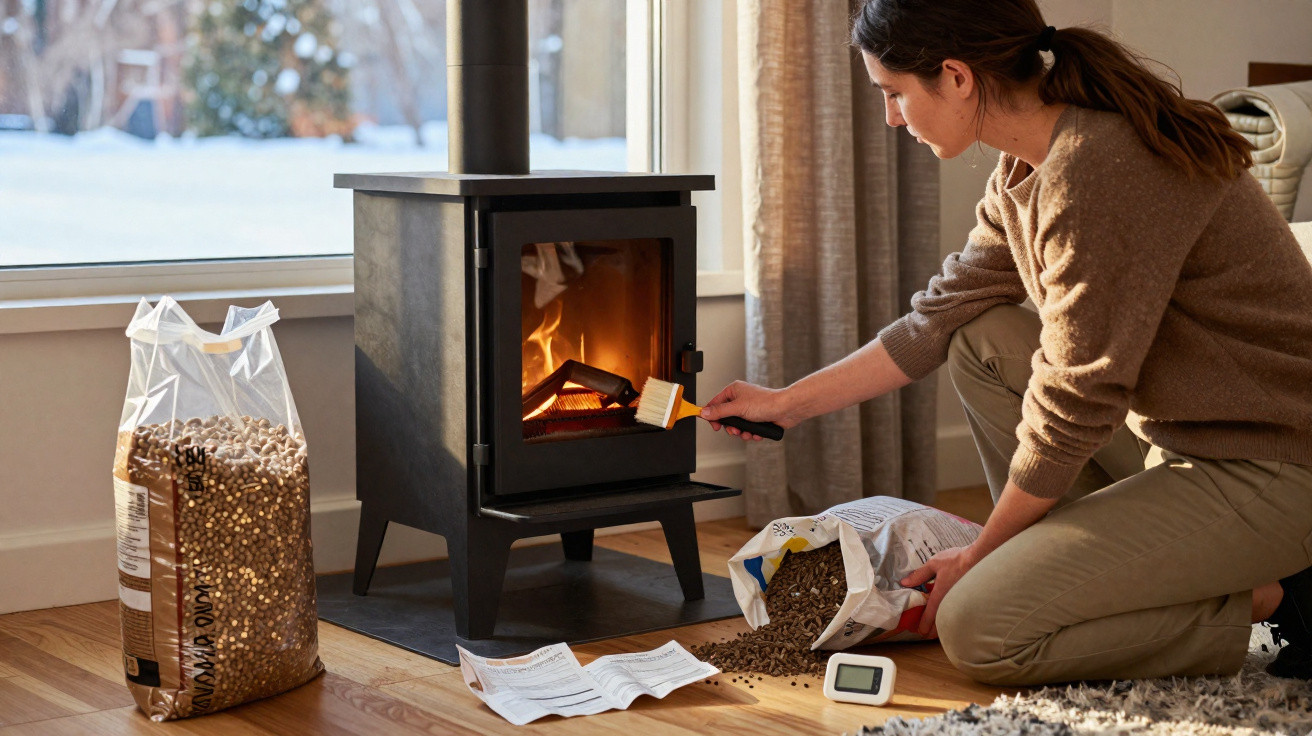
Across Europe and North America, homeowners are voicing the same frustration: their stove seems to run without pause, the house still does not feel properly warm, and the tonne of pellets stored in the garage is gone weeks earlier than expected. In most cases, the issue is not the technology, but several common day-to-day errors.
Why your pellet stove may be burning money, not just fuel
Pellet stoves are marketed as an efficient, controllable replacement for log burners or gas heating. They regulate their output, manage airflow and depend on precisely calibrated sensors. If any part of this system is affected - whether by an unsuitable installation or neglected servicing - the stove may compensate by feeding in additional pellets.
Households that misuse their pellet stove can quietly increase consumption by 30 to 60%, without feeling much warmer.
Energy advisers in France, Italy, Germany and the US have reported the same trend this winter. Households buy a new stove hoping to reduce bills, only to be surprised by the number of pellet deliveries required. With energy prices still unpredictable, those extra bags place a direct burden on household finances.
Poor installation: when placement doubles pellet use
Before faulting the pellets themselves, many technicians assess the home's layout. A stove positioned badly will seldom distribute heat evenly, leading people to select higher settings and operate it for longer.
The wrong corner, the wrong height, the wrong chimney
Fitters caution against placing a stove in a tight alcove or behind furniture, as this holds back hot air and limits circulation. The result is uneven comfort: one area becomes too hot while another remains cold. Users then turn up the thermostat, causing the hopper to empty sooner.
The flue is equally important. If it is excessively long, too horizontal or marginally too narrow, the draft will be weak. Combustion struggles as a result, the flame burns less actively, and the control board supplies extra pellets in an attempt to sustain output.
| Installation mistake | Typical effect | Result on pellets |
|---|---|---|
| Stove in an enclosed corner | Pockets of heat, cold areas | Higher setting and longer operating periods |
| Large room, one undersized stove | Stove permanently operating at full load | Hopper runs out quickly |
| Flue with poor draft | Incomplete combustion | More pellets needed to achieve the set temperature |
A correctly sized and positioned stove often heats the same space with one to two pallets less per season.
Neglecting cleaning: the hidden drain on pellets
In theory, pellet stoves can achieve very high efficiency levels. In lived-in homes, however, ash, soot and fine particles soon undermine this performance. Just one or two busy weeks without cleaning can noticeably change the flame.
How dirt undermines combustion
A blocked burn pot prevents pellets from receiving sufficient air from beneath. Rather than burning brightly, they smoulder. The sensors register the lower temperature and demand more fuel. Dust gradually accumulating in air intakes or fan grilles causes the same problem.
- Dirty glass is often a sign of restricted airflow and incomplete combustion.
- A substantial layer of ash in the pot affects how the pellets settle and burn.
- Obstructed heat exchangers deliver less warmth to the room and send more heat up the flue.
Manufacturers generally advise removing ash quickly each day during the busiest part of the season, alongside a more thorough weekly clean. Many owners overlook this because the stove “still works”. It does, but at a higher cost.
Cheap pellets, costly winter heating
As prices have increased, more people have been tempted to change to lower-priced pellet brands. France and Italy in particular have seen an influx of cheap bags with uneven quality, greater moisture content and more dust.
Why poor-quality pellets damage your budget
Pellets that are inadequately compressed, or produced from mixed or contaminated wood, contain less energy per kilogram. To produce the same heat, the stove must increase its feed rate. Additional dust and contaminants also foul the auger, sensors and firebox more rapidly, reducing efficiency further.
A bag that costs 10% less can push total seasonal consumption up by 20% or more when quality drops.
Energy advisers commonly recommend certified pellets - including ENplus A1 in Europe or recognised North American standards - because they offer low moisture levels and reliable combustion. Although the bag may cost more in the shop, its heat cost per kilowatt-hour can be lower.
Incorrect settings: the “always on” approach
Technicians visiting homes this winter have also identified another recurring issue: stoves left permanently at high output without a programmed schedule. Many people use a modern pellet appliance as though it were an old-fashioned wood burner - turning it up when cold and allowing it to blaze continuously.
Temperature, ventilation and scheduling
Pellet stoves work most effectively at a consistent, moderate output. A very high temperature setting makes the appliance alternate between intense burning and stopping phases. Every ignition uses additional pellets and puts strain on components.
Ventilation settings can create a different set of issues. An overly fast fan sends hot air out too quickly, so occupants feel a draught rather than warmth. They then raise the target temperature once more. Insufficient ventilation, by contrast, overheats the stove and cuts efficiency.
Effective use depends less on maximum output than on sensible planning:
- Position a thermostat or built-in probe at living height rather than close to the floor.
- Schedule slightly cooler temperatures overnight or while the home is empty.
- Seek steady comfort - for example, 19–21°C - instead of sudden bursts of heat.
Overlooking insulation: heating the street rather than the room
The increase in pellet stove installations in older homes has highlighted an uncomfortable reality: even an advanced stove cannot make up for walls that lose energy. In poorly insulated properties, heat may escape almost as quickly as the stove creates it.
Pellets versus heat loss
Gaps around windows, uninsulated roofs and uncovered floors can act like open wallets. Owners often make the stove work harder because they assume it is underpowered. In fact, warmth is simply leaking through weak points in the building.
In a draughty living room, the same comfort can require two or three times more pellets than in a properly insulated space.
Energy experts often recommend beginning with affordable measures, such as sealing windows and doors, installing heavy curtains and placing rugs on bare flooring. Bigger improvements, including loft insulation or double glazing, reduce pellet demand more substantially over several winters.
How to bring pellet consumption back under control
Specialists auditing pellet-heated homes regularly recommend the same immediate measures to bring bills under control:
- Arrange an installation check covering flue diameter and length, the stove's location in the room, and whether its size suits the living area.
- Follow a rigorous cleaning routine throughout the heating season, including the fans and heat exchangers.
- Choose reliable, certified pellets and keep them in a dry, ventilated storage space.
- Use programmable settings and moderate temperature targets instead of running at maximum power all day.
- Monitor comfort with a separate thermometer so that habitual overheating can be avoided.
Energy agencies in several European regions now provide indicative estimates: in a well-insulated, medium-sized home, a good-quality stove commonly uses between 2 and 4 tonnes of pellets annually, depending on the climate. Major differences between this range and actual consumption usually point to one of the issues outlined above.
Carrying out a quick household “pellet audit”
Many owners can complete a straightforward self-check over a weekend. Compare your use with that of neighbours in similar homes, identify draughty areas by walking barefoot near windows and doors, and watch the flame. A bright, stable flame usually indicates sound combustion, while a dark, smoky or sluggish flame suggests a problem.
A simple record of bags used, outdoor temperatures and daily operating time can expose useful patterns. You may find, for instance, that weekends spent constantly at high power consume disproportionately more pellets than weekdays managed with a programmed schedule.
Beyond pellets: a whole-home heating strategy
A pellet stove is often installed as a rapid answer to a shock gas or electricity bill. Once in place, though, it raises wider questions about the way a home manages warmth. Some families combine a pellet stove with low-temperature radiators, while others use electric back-up heating in bedrooms or solar panels to supply electricity for fans and controls.
Considering the entire system can produce further savings. A modest insulation improvement, improved zoning between rooms, or practices such as shutting doors early in the evening can remove dozens of bags from seasonal usage. For many households, the real benefit comes not from one major purchase, but from a set of practical changes that ensure every kilogram of pellets delivers value.




Comments
No comments yet. Be the first to comment!
Leave a Comment