
A small group of residents stood silently on the bridge over the railway, holding up phones while children waved as though they were watching a parade rather than the close of an era. Ten years earlier, spending only a few minutes outdoors here could leave your throat burning. The river beneath them carried an odd orange froth, and birds kept away.
Now reeds move along the river’s edge while dragonflies dart over the surface. Anglers have returned, bringing folding chairs and familiar tales. On hot days, the hospital records fewer asthma emergencies. Residents say they can once again dry white washing outdoors. Nobody describes it as a miracle.
They describe it as the result of coal quietly disappearing.
The day the sky changed colour
One cold spring morning in a former coal town in eastern Germany, the difference seemed almost ridiculously straightforward: the sky appeared… wrong. Residents emerged from their homes to find that the familiar grey-brown haze had vanished. The cooling towers that had once blurred the skyline had ceased to breathe. Above fields formerly darkened by ash, slender white turbine blades now rotated.
For generations, people had marked time by the deep hum of conveyor belts and the plant lights glowing after dark. Children drifted off to sleep to that noise. Their parents coughed through it. That first week, the quiet felt weighty and almost suspicious. Then birds began arriving in numbers nobody could recall seeing. The first reported kingfisher sighting sent the local Facebook group into a frenzy.
Over the following years, monitoring confirmed what residents had already noticed in their own breathing. Fine-particle pollution fell substantially after coal combustion ended. Nitrogen dioxide concentrations declined as well. Doctors in the area dealt with fewer winter bronchitis cases. The river no longer had a metallic smell. One biologist told me that frogs were the first to return, as they commonly are when an ecosystem is no longer overwhelmed by stress.
The same pattern has appeared in places ranging from the US Midwest to coastal China. When coal plants close or reduce their output, ecosystems start to breathe again. The change is neither immediate nor uniform, and the damage leaves scars, but recovery begins. Acid rain becomes less severe, soils gradually recover their structure and woodland undergrowth returns. Fish numbers, battered for decades by warm water discharges and toxic runoff, begin a cautious rebound. It resembles a natural system drawing its first full breath after being held underwater for years.
Researchers observing these changes tend to use “stabilisation” rather than “healing”. Coal harms more than air and water: it subjects ecosystems to continual shocks. Heavy metals accumulate in sediment. Soot blackens snow and accelerates melting. Thermal plumes from cooling water disrupt breeding patterns. Once that pressure is removed, nature does not simply return to an idealised past. Instead, fresh balances develop. Older species and newcomers learn to live alongside one another in conditions that have suddenly become less hostile.
How regions genuinely move away from coal
Leaving coal may sound like a grand political catchphrase, but in practice it involves many modest, difficult steps. The regions that succeeded most often began with an unexciting task: identifying where coal had caused the greatest harm. They mapped air-quality hotspots, vulnerable catchments and villages caught between pollution and unemployment. That map then served as a practical list of priorities.
The next steps were hands-on. Electricity grids needed retrofitting to accommodate fluctuating wind and solar generation. Ageing transmission lines required upgrading before they failed during summer heatwaves. Coal plants were given closure dates years ahead, allowing communities time to prepare. In some areas, councils negotiated buyouts requiring utilities to pay for wetland restoration or woodland buffer zones as part of closure agreements. None of this is glamorous. It means paperwork, public consultations and long nights in cramped offices.
The transition caused the least harm where workers were not expected to manage alone. Retraining for former coal workers went beyond empty “learn to code” messages. Courses covered grid maintenance, renewable-energy installation, environmental monitoring and even tourism in landscapes restored after pollution. In one Polish region, a former open-cast mine became a lake surrounded by cycle routes and bird hides. People who once worked in the pit now lead visitors hoping to spot rare waders and orchids.
There were mistakes too, and they should be acknowledged. Some regions moved rapidly towards gas as a supposedly “clean” bridge, tying themselves to a different fossil-fuel dependence. Elsewhere, a handful of solar panels were installed while the largest coal units continued operating. Let’s be honest: nobody makes every decision perfectly under pressure, and politics often bends towards immediate anxieties. Even so, the regions whose ecosystems truly stabilised shared one feature: they treated coal exit as an energy project as well as a land-and-water project. They cleaned ash ponds, replanted spoil heaps and reconnected broken-up rivers. That is where recovery became more profound.
Living with the post-coal landscape
For anyone living in an area still heavily dependent on coal, the first helpful action is decidedly unglamorous: pay attention to the particulars of your environment. Use an inexpensive notebook or a basic notes app. When is the haze at its worst on your road? Which part of town has a metallic odour after rainfall? Where do children with asthma appear to have the greatest difficulty? Once transition starts, this kind of on-the-ground record can become unexpectedly influential.
Communities that documented their rivers, birds and even their own coughing had greater influence when closure proposals arrived. They were able to identify, in detail, where restoration needed to begin. A fishing club in northern Spain discreetly recorded water clarity and species numbers for years while a nearby coal plant remained active. After its closure was announced, the club’s home-made records helped channel funding towards cleaning two tributaries first. Five years later, they were finding species that their grandparents had only spoken about.
We have all had the experience of looking at an old photograph of our town and recognising how much everyday life has taught us to overlook. Smog becomes “normal”. The lifeless stretch of river behind the supermarket simply disappears from view. This is why, in towns beginning the transition, one of the most useful things neighbours did was walk together. They took short walks beside streams, around slag heaps and across neglected meadows. These were not protests, merely people looking closely and sharing memories: “this used to be full of frogs” or “you couldn’t swim here for decades”. Those shared recollections became shared demands.
There are pitfalls, naturally. One is assuming that the closure of a plant will instantly create paradise. Another is overlooking people who feel economically abandoned. Both can create resentment capable of obstructing restoration.
Regions that persisted through difficult periods followed a straightforward habit: they discussed jobs and birds in the same conversation. School visits included both new solar farms and recovering wetlands. Former miners were asked to join the boards deciding the future of reclaimed land, rather than leaving those decisions solely to environmental activists. Transition ceased to be something imposed upon them and became something more untidy, collective and shared.
“When the smoke stacks went cold, I thought we’d just be poorer with a nicer view,” one ex-plant worker in the US Appalachians told me. “Then my grandson stopped using his inhaler so much. That changed the way I looked at everything.”
Amid all of this, small rituals helped communities experience the change rather than merely encounter it in policy documents.
- Planting the first trees on a former ash dump, then returning annually to see which ones survived.
- Holding citizen bird counts beside the river once each season.
- Creating a straightforward telephone hotline for residents to report fresh pollution or fish deaths.
- Maintaining a public mural or noticeboard listing “species we’ve seen return”.
- Matching retired plant workers with local children for storytelling walks through the changing landscape.
These actions cannot magically undo decades of damage caused by coal. Their contribution is more subtle. They restore the idea that the land is shared rather than sacrificed. They also show that ecosystem stabilisation is not purely a technical undertaking. It is a cultural shift played out in conversations around kitchen tables, at school gates and beside cleaner rivers.
A future shaped by cleaner air
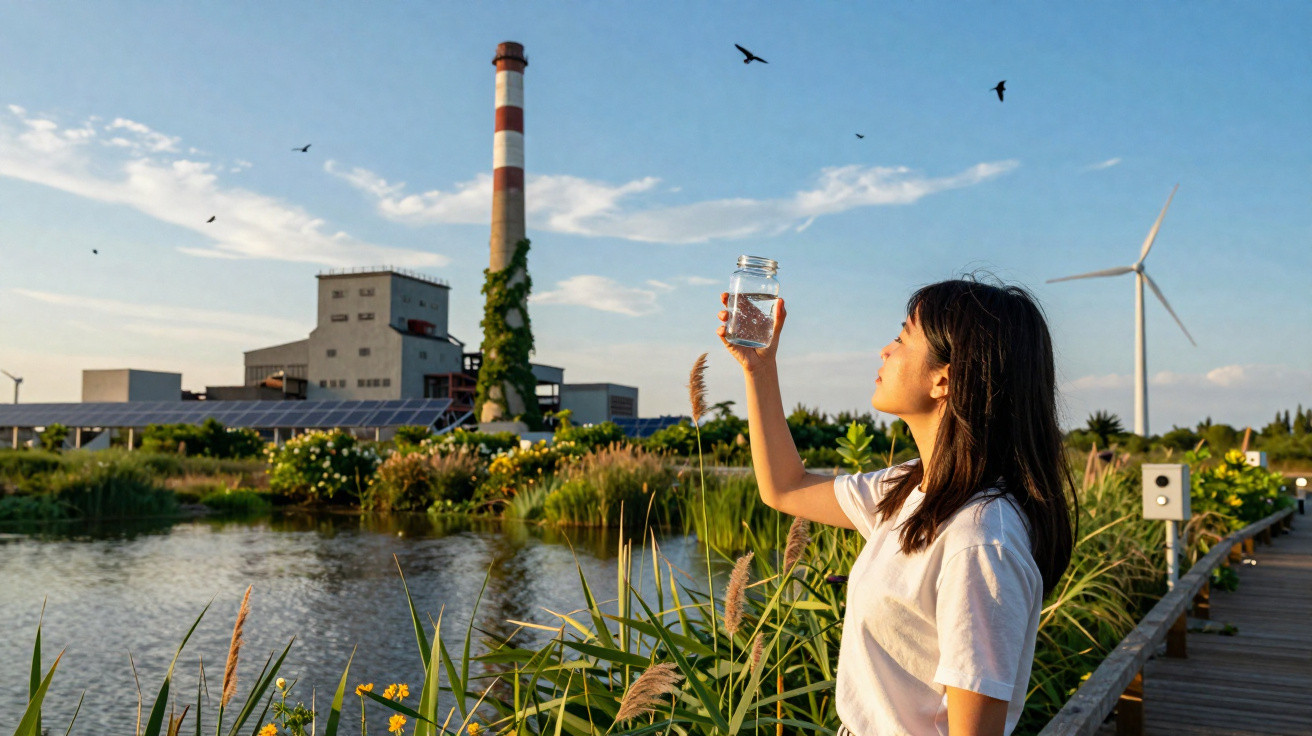
From a hill above a former coal basin at sunset, the future looks neither polished nor futuristic. It looks everyday. Children play football where slag heaps once rose. A slightly shabby café sits by a lake that is now blue. Wind turbines turn gently on a day with almost no breeze. Dogs paddle through shallower, clearer water. It is not a postcard; it is simply life with fewer unseen dangers in the air.
Regional ecosystems do not offer thanks when coal burning stops. They merely become less erratic. Floods arrive with marginally less force because soil retains more water. Wildfires spread a little more slowly where the undergrowth is healthier. Coastal fish stocks recover sufficiently for small-scale fishers to make it through another season. These are understated gains. They seldom reach national headlines, but together they create something durable: a landscape no longer permanently close to another crisis.
Naturally, people still disagree over what should replace the chimneys: data centres, wetlands, homes, solar farms or cultural spaces. That conflict will not disappear. The difference lies in the baseline. The starting point is no longer a sacrifice zone. It is somewhere able to accommodate debates over alternative futures, rather than debates over whether people deserve air they can breathe at all.
Through transitioning away from coal, many regions have learned that stability is not about restoring the past. It means having enough ecological resilience to make mistakes, try things out, develop, fail and still retain a living river, a functioning woodland and a summer sky alive with insects. From far away, these might sound like modest luxuries. Nearby, they appear as a kind of wealth that does not disappear with the next price surge or political shift.
Look carefully at any post-coal landscape and the old industry remains visible for years: damaged hills, unusual ponds and roads named for miners. Yet something else is gradually taking over. Self-seeded birches emerge through fractured tarmac. Reed beds filter toxins grain by grain. A young heron stands motionless in water that, not long ago, contained more poison than pond.
| Key point | Detail | Why it matters to the reader |
|---|---|---|
| Coal exit stabilises ecosystems | Reduced air and water pollution eases constant pressure on local species | Helps explain why improvements in health and biodiversity often happen together |
| Transition is granular, not abstract | Grid improvements, retraining and land restoration take place step by step | Shows what to look for or ask about in your own region |
| Communities shape the post-coal landscape | Citizen monitoring and local knowledge help determine where restoration starts | Encourages you to view yourself as a participant rather than a spectator |
FAQ:
- Does coal phase-out really change local ecosystems that fast? Short-term improvements may emerge within a few years, particularly in air quality and certain water measures. More substantial recovery in soils and biodiversity takes longer, but it can still follow once the pressure is reduced.
- What happens to coal workers when plants close? Results differ greatly. Where governments pay for retraining and include workers in planning, people often move into grid work, renewable energy, construction and environmental restoration.
- Can gas or biomass fully replace coal without new problems? They lower some emissions but create their own climate and land-use concerns. Many experts therefore regard them as partial or temporary measures rather than ideal final solutions.
- Are old coal mines and ash dumps always dangerous? They can be, because of heavy metals and unstable ground. However, with appropriate remediation, many locations gradually become parks, lakes or nature reserves.
- What can individuals realistically do in a coal-heavy region? Record local conditions, join or create citizen-science groups, attend planning meetings and support policies that connect plant closures with specific restoration projects.






Comments
No comments yet. Be the first to comment!
Leave a Comment