

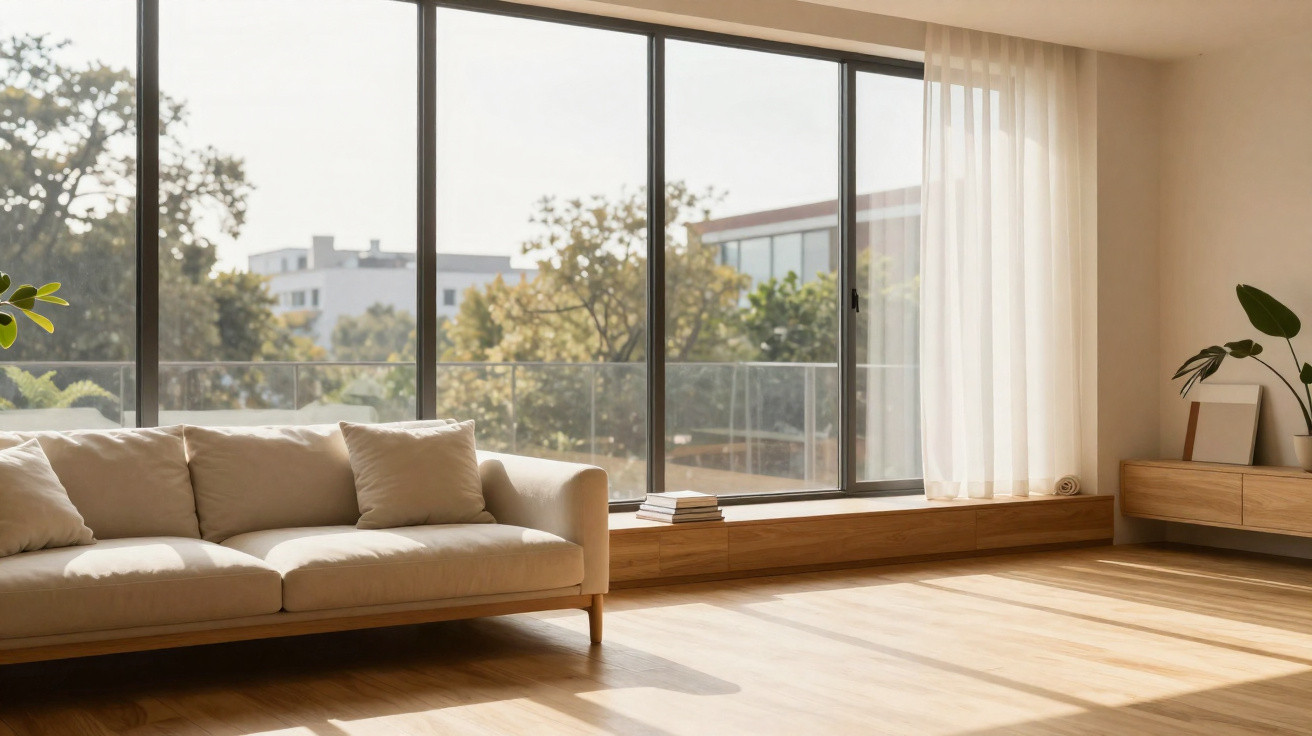
On a January evening, the living room can feel unexpectedly chilly even though the thermostat reads 20 degrees. You pull the throw closer, blame the windows and suspect the boiler… without noticing the large sofa pushed against the wall, directly in front of the radiator. This is a familiar situation in many homes, particularly where every square metre matters and the TV area still needs to feel inviting. The issue is not immediately obvious: the radiator is working and may even be hot to the touch. Yet its heat is trapped in a narrow gap, behind the cushions and beneath the seat. As a result, the heating is turned up to offset discomfort that could sometimes be avoided. A well-positioned piece of furniture can cost more than you might think.
When a sofa turns the radiator into a source of wasted heat
We have all pushed furniture against the walls to free up space and make the living room look tidier. The sofa then ends up in front of the radiator, sometimes only a few centimetres away, because the layout seems the obvious choice. Visually, it looks neat. In thermal terms, it is far less effective. A radiator warms the surrounding air, which then naturally rises through the room; when a sofa obstructs that movement, the warm air builds up behind its back rather than circulating. The wall, fabric and foam absorb some of that energy. The room is heated unevenly, leaving a stifling patch close to the furniture while the sofa itself feels cold as soon as you sit down.
In a 55 m² flat, simply moving furniture can create a noticeable difference within the first few days. Take a living-room radiator set to 19 °C: concealed behind a deep sofa, it has to run for longer before the thermostat sensor finally detects the right temperature. Some energy professionals suggest that excess consumption can reach 10% in the least favourable layouts, especially where several heat emitters are blocked and the property is already poorly insulated. This figure is not an automatic guarantee or an unavoidable penalty. Above all, it is a reminder that inefficient heat distribution almost always ends up affecting the annual bill.
The process is fairly straightforward: convection, the natural upward movement of warm air, needs room to work. Behind a sofa, it meets a substantial barrier that slows circulation and forms a small, useless pocket of heat. Rather than properly heating the living room, the radiator primarily warms the back of the sofa and the adjoining wall. With an electric heater, the control system may keep the heating element active for a long time. In a central-heating system, the boiler receives the signal that heat is still needed. Thermal comfort depends as much on furniture placement as on the temperature shown on the display. A degree that is not properly felt often leads people to raise the thermostat, with the cost quietly mounting.
Simple ways to let heat circulate without redesigning the whole living room
The first step is to clear the area in front of the radiator. Leaving 20 to 30 centimetres between the sofa and the unit already gives warm air a much clearer route out; if the layout allows, 40 centimetres is more comfortable still. There is no need to empty the room or give up your favourite reading corner. Sometimes, moving the sofa slightly forwards, shifting an armchair or changing the position of a coffee table is enough. Try a practical test: heat the room as usual for an hour, then place your hand behind the sofa back and at the front of the sofa. If the difference is striking, the radiator is probably working to little effect.
Long curtains, enclosed low furniture and packed shelves positioned in front of a heat emitter cause the same kind of problem. It is neither a design mistake nor carelessness: in older homes, radiators can be installed in the least convenient place, directly beneath a window or in a particularly busy corner. To be honest, nobody moves their sofa every day to check whether warm air can pass. The aim is instead to identify permanent obstructions. Also avoid drying laundry directly on the radiator: it slows heat distribution, raises indoor humidity and creates that lingering chilly feeling which encourages you to turn the heating up even further.
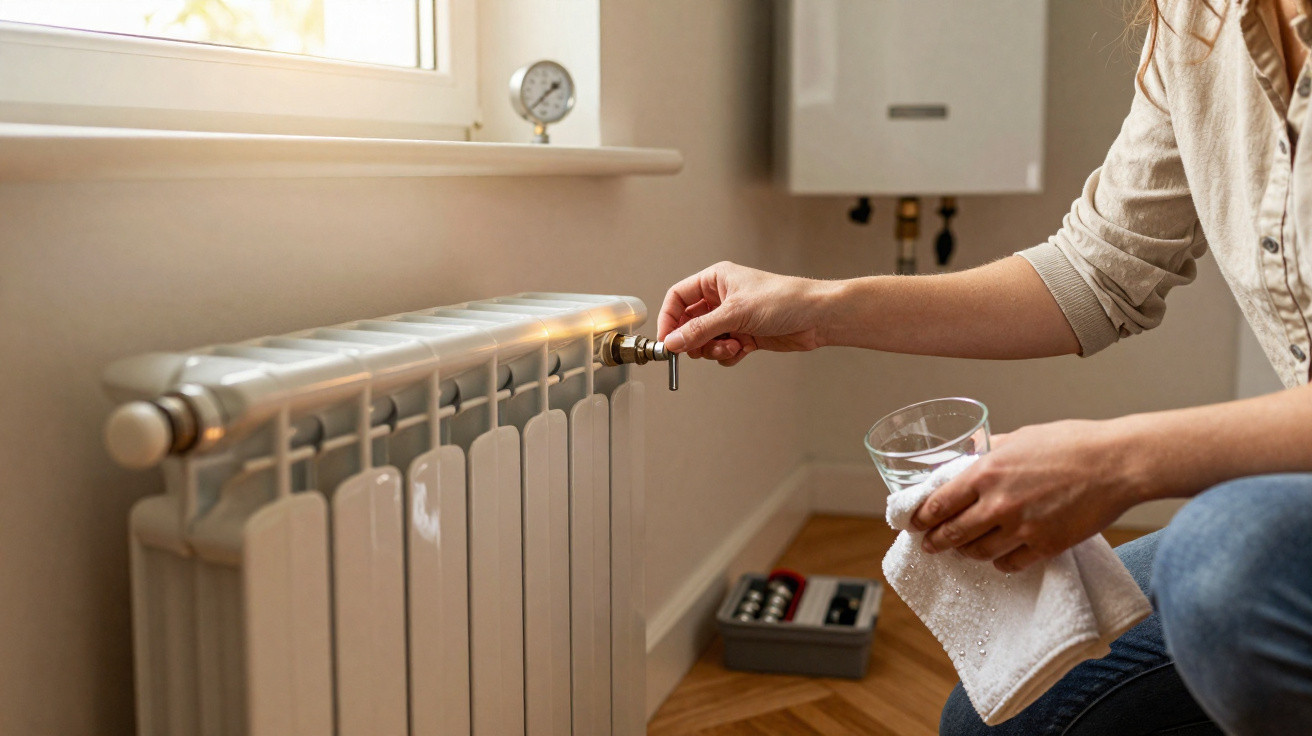
Before changing any settings, watch the radiator during an ordinary evening. A unit that is warm at the top but cold at the bottom may need bleeding or checking, whereas a radiator that is evenly hot but hidden mainly needs more space around it.
“Heat needs to be able to rise and spread around the room: a radiator is not designed to heat the back of a piece of furniture,” is a principle shared by many heating engineers.
A few straightforward checks can help without making life complicated:
- leave clear space in front of the unit;
- avoid covers, throws and curtains that drape over it;
- remove dust from accessible grilles and fins;
- check that the thermostat is not located in a misleadingly warm area.
A layout detail that also improves the feeling of comfort
Moving a sofa by a few tens of centimetres will not turn a poorly insulated property into a passive house. Cold walls, draughts, ageing windows and a poorly adjusted boiler still weigh heavily on overall performance. Even so, this small adjustment has particular value: it makes better use of the heat you are already paying for. When warmth spreads more evenly, it may be possible to lower the set temperature slightly without feeling as though you must wear a jumper all the time. The living room becomes more consistent, your feet stop seeking out the thickest rug, and the evening gains that subtle comfort you tend to notice most when it is gone.
| Key point | Detail | Added value for the reader |
|---|---|---|
| Sofa in front of the radiator | The furniture blocks the upward movement and distribution of warm air. | Identify a simple cause of discomfort and wasted energy. |
| Space to keep clear | Ideally, allow 20 to 30 cm of clear space in front of the unit. | Improve heat circulation without expensive work. |
| Heating settings | Avoid raising the thermostat before clearing the radiator. | Limit excess consumption that can reach 10% depending on the layout. |
Comments
No comments yet. Be the first to comment!
Leave a Comment