
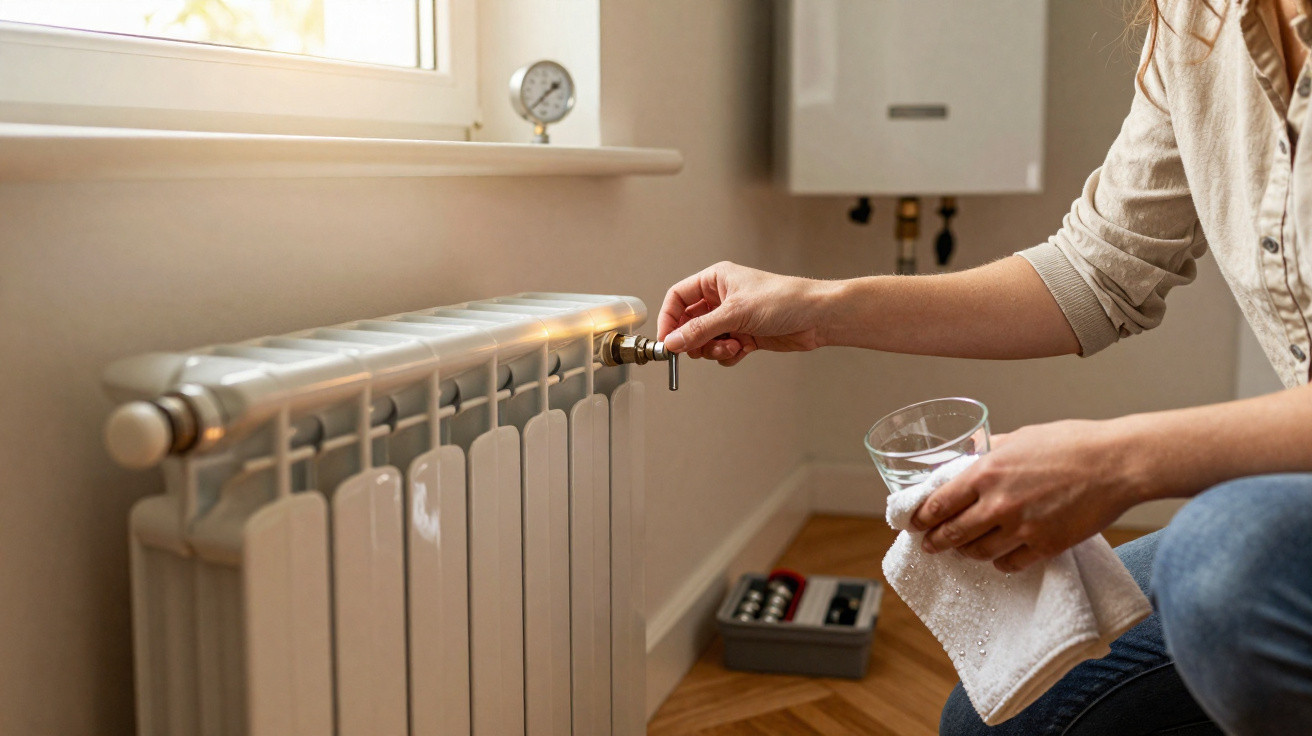
In the middle of winter in France, a radiator that is hot at the top but freezing at the bottom often points to a straightforward issue that you can fix yourself.
This common fault in central-heating systems can noticeably reduce comfort at home while pushing up heating bills. An online news article, cited by a specialist home publication, sets out a bleeding method that takes around ten minutes and can restore normal operation. Most householders can carry out this task, provided they follow several precise steps and basic safety precautions.
Why a radiator is hot at the top and cold at the bottom
When hot water is flowing properly through a radiator, its temperature should feel relatively even. It may be slightly warmer at the top than at the bottom, but no part should feel distinctly cold. If the bottom stays cold while the upper section is very hot, the publication explains that the boiler itself is seldom the cause. The issue is more likely to be:
- poor water circulation through the radiator;
- too much air trapped in the system;
- internal build-up, particularly sludge deposits;
- or incorrectly adjusted balancing valves.
In the specific case described by the source, trapped air is the main explanation. It prevents water from completely filling the radiator. Hot water then circulates mainly through the top section, leaving the lower part without an adequate supply.
A radiator that is hot at the top and cold at the bottom often indicates air in the system or an imbalance in the water circuit, which bleeding can correct quickly.
Air bubbles can form after the heating circuit has been refilled, following work on the boiler, or gradually over the years as small amounts of air enter through seals and connections.
Bleeding a radiator in ten minutes: step-by-step method
The publication outlines a standard process recommended by many heating engineers. It should be done calmly and without rushing, using only a small amount of equipment.
Equipment to prepare before you start
Before opening anything, gather the following basic items:
- a suitable radiator bleed key, or a small screwdriver depending on the model;
- a container to catch water, such as a bowl, bucket or washing-up bowl;
- a cloth or sponge;
- gloves, if needed, to protect your hands from hot water.
The publication notes that radiators must be bled one at a time. The task takes roughly ten minutes per radiator, although it can take longer in a large property or an older heating system.
Step 1: check the boiler pressure
A modern central-heating system will generally have a pressure gauge on the boiler. According to the source, before bleeding a radiator you should check that the pressure is within the range advised by the manufacturer, often around 1 to 1.5 bar for a standard house or flat. This information is given in the boiler manual.
If the pressure is already very low, bleeding will reduce it further. You will then need to top up the system with water afterwards, using the filling valve provided for this purpose.
Step 2: switch off or place the heating on standby
The publication advises turning the heating off, or selecting its “off” setting, a few minutes before beginning. This has two purposes:
- to prevent splashes of excessively hot water;
- to allow pressure in the system to stabilise, making the bleeding process more predictable.
Radiators will remain warm for a while, allowing you to work without immediate danger while retaining some heat in the unit.
Step 3: find the bleed screw
Every central-heating radiator should normally have a bleed point. On most French models, this is either:
- a small metal screw at the top of the radiator, on the opposite side from the inlet valve;
- or a small white or chrome cap with a slot for a special key.
Do not touch the large nut joining the radiator to the wall, or the main pipe connections. Only the bleed screw should be handled during this task.
Step 4: open the radiator bleed valve gradually
The aim is to release air trapped inside the radiator. The source sets out the following procedure:
- place the container beneath the bleed screw;
- hold the cloth around it to minimise splashing;
- turn the screw very slightly in the indicated direction until you hear a hissing noise.
That hissing sound is the air escaping. Wait for a few moments. The publication stresses that the bleed valve must not be unscrewed completely, as it could fall out or cause an uncontrolled spray of water.
Once all the air has escaped, water will begin to flow steadily, with no bubbles or spluttering. This shows that the radiator has filled correctly again.
Step 5: close it as soon as water flows continuously
As soon as the stream of water becomes steady, close the screw straight away without overtightening it. Normal tightening is enough to prevent leaks. Use the cloth to wipe up any remaining droplets.
Bleeding stops at the exact point when water flows freely and consistently: continuing beyond that would needlessly reduce the pressure in the system.
Once the heating has been switched back on, the publication recommends checking the radiator by touch. Within a few minutes, the bottom section should start to warm up and the radiator should regain a more even temperature.
What if the radiator remains cold at the bottom?
If bleeding has not solved the issue, several possible causes are mentioned:
- the water inlet valve may be partly closed;
- the lockshield valve at the bottom of the radiator, on the return side, may be closed too far;
- the heating circuit may be clogged with sludge;
- the boiler circulation pump may be undersized or faulty.
In these circumstances, the publication recommends calling a heating engineer. A professional can check whether the system is balanced, carry out a power flush, or adjust the pump speed. These jobs go beyond the routine maintenance that a householder can reasonably undertake.
How successful radiator bleeding affects comfort and bills
A radiator that has not been bled properly will heat inefficiently and often leads people to raise the thermostat setting. The article highlights several practical consequences:
- greater consumption of gas, oil or electricity;
- cold areas in the home, especially close to windows;
- faster wear on certain heating components because they are working unevenly.
Conversely, correctly bleeding radiators helps distribute heat more effectively through every room. It may then be possible to lower the thermostat slightly, which can eventually be reflected in the heating bill.
A circuit free from air and sludge allows the boiler to operate at a steadier rate, with fewer on-and-off cycles to maintain the requested temperature.
The publication also identifies an immediate improvement in comfort: gurgling noises in pipes disappear, cold draught-like sensations near the floor are reduced, and temperatures become more consistent from one room to another.
In France, how often should radiators be bled and what precautions are needed?
For a home in France heated by water-filled radiators, many professionals advise regular bleeding. The source presents it as a routine maintenance task to schedule:
- once a year, ideally in autumn before the heating is turned back on;
- whenever a radiator shows unusual symptoms, such as noises or cold patches.
Bleeding does not replace the compulsory annual boiler service, which must be performed by a professional. It is an additional measure, alongside dusting radiators and checking thermostats.
In France, landlords and residential building management bodies may arrange power flushing or full system balancing where faults affect several homes. In such cases, simply bleeding radiators by occupants is no longer enough.
When you should not work on a radiator yourself
The publication warns that caution means avoiding DIY work in certain situations:
- radiators are too hot to touch;
- there is a smell of smoke or a suspected gas leak;
- there is a significant water leak from a radiator or pipe;
- the boiler pressure gauge cannot be read.
In these situations, it is better to switch off the heating and promptly contact a qualified professional. Incorrect handling of a pressurised system can make the problem worse.
Bleed radiators, but also monitor pressure and balancing
Bleeding is only one aspect of managing a central-heating system properly. Every time air is released, the system pressure changes. The publication says you should always:
- check the boiler pressure after bleeding several radiators;
- add water if the reading falls below the recommended range;
- make sure that no radiator remains closed when it should be open.
Balancing, meaning the adjustment of water flow through each radiator, is also highly important. A radiator that is very hot at the top but only lukewarm at the bottom in an overheated room may be receiving too much flow compared with the others. Some lockshield valves can be adjusted to regulate that flow and distribute heat more evenly throughout the property.
A simple task that reduces risks and extends heating-system life
By removing air from the circuit, bleeding also lowers the risk of internal corrosion in radiators and pipes. Air encourages metal oxidation, creating sludge that can eventually weaken certain parts.
Combined with occasional power flushing by a professional, this simple task helps maintain good seasonal heating efficiency. It enables the boiler to run in more stable conditions, without sudden fluctuations or unwanted noises in the pipework.
For a reader in France, adopting this maintenance habit means acting at the first signs of a radiator that is unusually cold at the bottom: locate the bleed screw, spend ten minutes releasing the air, then check the boiler pressure. It is a basic step, but one that can prevent a whole winter spent shivering in a poorly heated room.


Comments
No comments yet. Be the first to comment!
Leave a Comment