
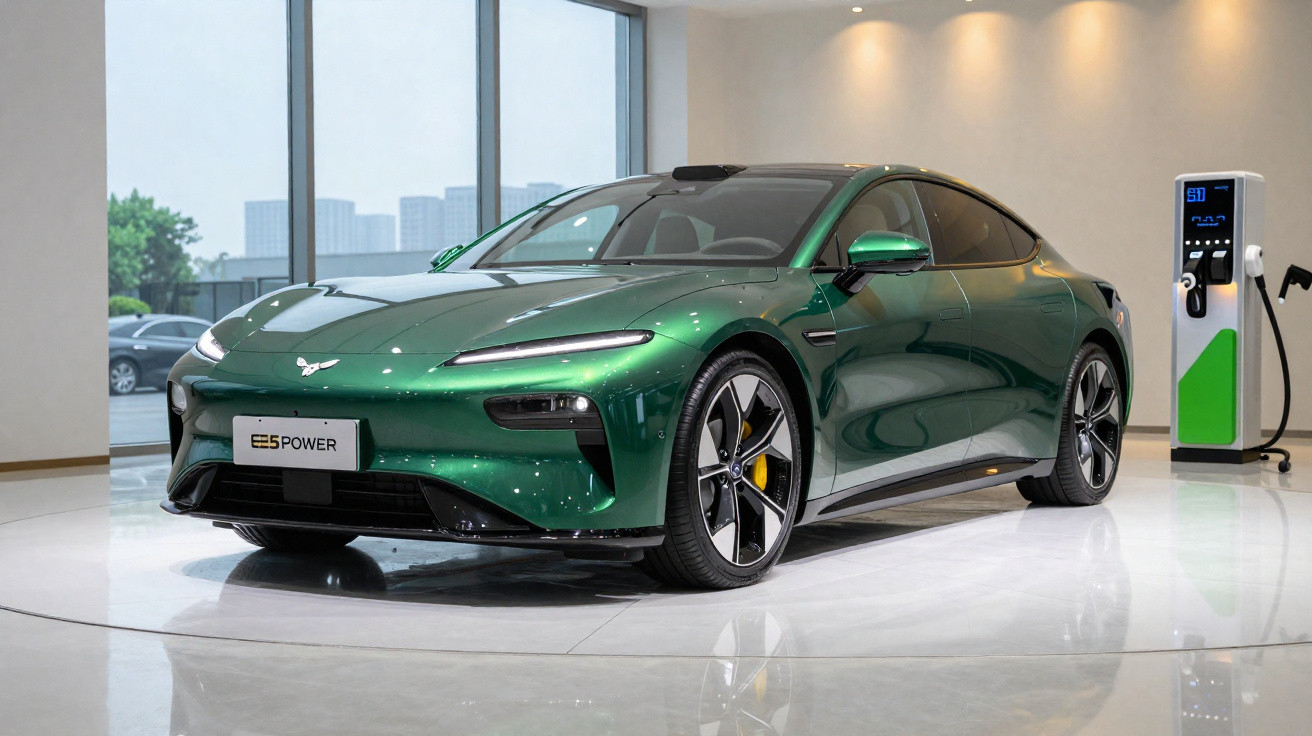
Fuel prices rise and fall, everyday life is becoming more expensive, and many commuters are frustrated. Amid this ongoing squeeze, a technical solution is doing the rounds that allowed one motorist to fill up for almost bargain prices: a dedicated control unit for Superethanol E85. But what is behind it, how legal is it, and is the conversion worthwhile in this country too?
Why Superethanol E85 is attracting so much attention
In France, Superethanol E85 has already become one of the most sought-after alternatives to conventional petrol. This fuel is largely made up of ethanol – an alcohol produced from crops, often sugar beet or cereals.
Its name gives the composition away: ethanol can account for up to 85 per cent, with ordinary petrol making up the remainder. From a technical standpoint, it is still a spark-ignition fuel, burned in modified petrol engines.
“The main argument for E85 is straightforward: a litre often costs only around half as much as ordinary petrol.”
According to official figures, forecourt prices in France generally range from €0.80 to €1.00 per litre. By contrast, conventional grades such as SP95 and SP98 often cost well over €1.80 per litre there.
A simple calculation illustrates the scale of the difference:
- 50 litres of E85 at €0.90: roughly €45 per fill-up
- 50 litres of conventional petrol at €1.90: roughly €95 per fill-up
- Potential saving: around €50 with every full tank
This is precisely what the motorist in the original case is experiencing: since their car has been able to use E85, a full tank has cost roughly half as much. For commuters or families who need to refill every week, those sums can mount up very quickly.
FlexFuel-Box: what the additional engine device actually does
There is a catch: a standard petrol car cannot simply run on Superethanol E85 without modification. Some models can use small ethanol blends, but regular operation with a high ethanol content requires suitably adapted conditions for the engine.
This is where the so-called FlexFuel-Box comes in. Installed as an aftermarket electronic unit in the engine bay, the module interfaces with the fuel-injection control system.
How the FlexFuel-Box works
In simple terms, the unit detects how much ethanol is in the tank and adjusts the injection quantity accordingly. As ethanol has a different energy content from petrol, an engine needs a greater volume of fuel when using E85 to deliver the same performance.
- Sensors detect the ethanol proportion in the fuel
- The box calculates the required injection quantity
- The fuel injectors receive adjusted signals
- The engine control unit can handle ordinary petrol, E85 or any blend of the two
“With a FlexFuel-Box, a petrol car can run on mixed fuels: conventional petrol, Superethanol or any combination – the vehicle adapts automatically.”
For the driver, this means there is no need to commit to one fuel at the forecourt. If only standard unleaded petrol is available, that can be used. If the station sells E85, it can be filled up without concern. The engine recognises the mixture and continues to run.
Legal requirements and installation: not a garage DIY project
In France, a 2017 decree sets out in detail the conditions under which these ethanol boxes may be fitted. The legislation is intended to prevent amateur mechanics from modifying vehicles improperly and, as a result, compromising safety or emissions performance.
The key requirement is that installation must be carried out by a certified specialist. Garages fitting these systems need official approval. Only then does the vehicle remain legally compliant and retain its valid type approval.
The process usually involves the following:
- Checking whether the vehicle model is approved for conversion
- Selecting a suitable FlexFuel-Box for the engine output
- Professional installation in the engine bay, including wiring adjustments
- A test run, emissions measurement and functionality check
- Updating the vehicle documents so that E85 operation is registered
Importantly, the system applies solely to petrol-powered vehicles. Diesel vehicles cannot be converted to E85 using this technology. Anyone driving an older diesel therefore gains no benefit from this particular solution.
What conversion costs – and when it pays for itself
A FlexFuel-Box is not a cheap gadget costing just a few euros online. In the country discussed, prices including installation range from roughly €700 to €1,500, depending on the vehicle type. More powerful engines or complex injection systems require more work, which raises the bill.
That figure may seem off-putting at first. Set against the potential savings, however, it appears far more manageable. The calculation assumes that a tank of E85 costs around half as much as a tank of conventional unleaded petrol.
| Annual mileage | Consumption (petrol) | Annual saving* | Payback period |
|---|---|---|---|
| 10,000 km | 7 l / 100 km | around €700–800 | 1–2 years |
| 20,000 km | 7 l / 100 km | around €1,400–1,600 | possible in under 1 year |
*Rough estimate based on the price differences quoted for France; actual consumption with E85 rises slightly.
“Those who drive a lot can recoup the investment within one to two years – after that, every fuel stop becomes a genuine source of savings.”
In some regions of the neighbouring country, local authorities or regional bodies support conversion to Superethanol with grants. This further reduces the amount paid by the vehicle owner. Motorists in Germany should also check for local schemes, tax relief or specific regulations before considering a conversion.
Technical limitations, risks and what garages report
Despite the appealing sums involved, this option is not suitable for every car. Manufacturers often approve only particular engines and model years for use with high ethanol contents. Older engines, especially those with sensitive seals and hoses, can encounter problems caused by the alcohol in the fuel.
Garages highlight the following considerations:
- Older rubber components in the fuel system may age more quickly when exposed to ethanol
- Poorly calibrated systems can cause cold-start problems in winter
- Consumption generally increases noticeably with a high ethanol content
- Warranty issues for newer vehicles need to be clarified in advance
There is also a highly practical issue: availability. Superethanol E85 is still not sold at every filling station. The network is expanding in France, but drivers must nevertheless keep an eye on their route. Those living in rural areas may be lucky – or unlucky – with local infrastructure.
What does this mean for motorists in German-speaking countries?
Many aspects of the French example cannot be transferred directly, but they point clearly in one direction. Wherever E85 is officially sold, the question of suitable conversion kits usually follows. National approval rules, tax law and warranty provisions vary, yet the technical principle is the same: an additional control unit enables mixed-fuel operation using a considerably cheaper fuel.
Anyone considering preparing a petrol car for ethanol use should therefore take several steps. First, check E85 availability in their own area. Then consult manufacturer information and specialist garages to establish whether their engine is suitable and which systems have official approval.
“The calculation works only when the vehicle, legal position, filling-station network and personal mileage all fit together.”
The environmental side effect is also of interest. Ethanol is often produced from renewable raw materials, whereas conventional petrol is entirely derived from fossil sources. In practice, the actual CO₂ balance depends on how the raw materials are grown, transported and processed. Even so, people who drive very high mileages may be able to reduce their own fossil-fuel consumption noticeably.
The case of the motorist who suddenly fills up for half the price thanks to a FlexFuel-Box demonstrates above all how greatly a single technical change can affect a car’s running costs. As fuel prices rise, interest in alternatives is also increasing across German-speaking countries – and E85 with intelligent engine management is likely to play a much larger part in that debate in future.



Comments
No comments yet. Be the first to comment!
Leave a Comment