
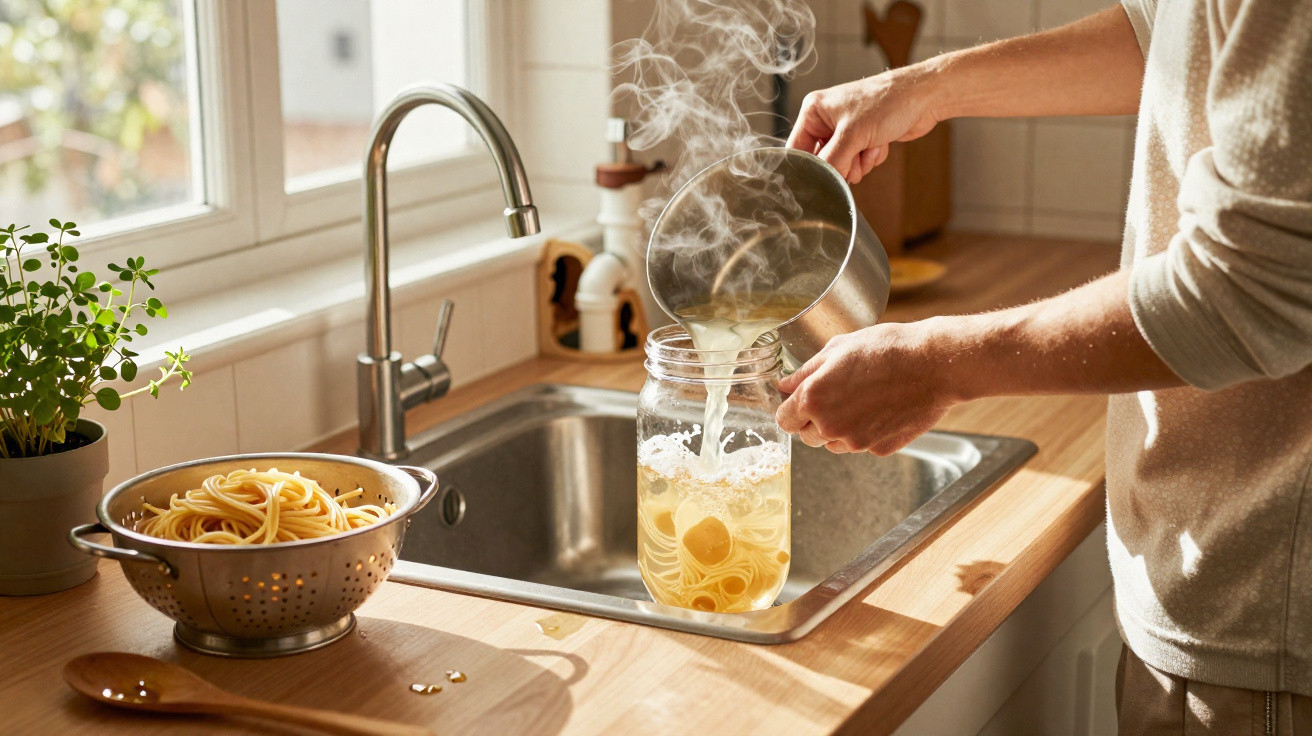
Almost everyone knows the routine: the pasta is ready, the pan comes off the hob, the contents are tipped into a colander in the sink – and boiling water rushes down the drain. It is quick, convenient and habitual. Beneath the worktop, apparently nothing happens. Yet this automatic action can gradually put strain on the kitchen, pipework and household budget.
Why boiling pasta water gradually weakens pipes
In many homes, the waste pipes beneath the sink are made from PVC. Although this plastic is hard-wearing, it is sensitive to high temperatures. It can start to soften at around 60 to 70 degrees. Pasta water is generally close to 100 degrees. Repeatedly pouring it straight into the drain regularly pushes the material towards its limit.
The most vulnerable areas include:
- Pipe bends immediately below the sink
- Joints between separate pipe sections
- Seals made from rubber or silicone
Heat can cause slight distortions in these areas. They are not visible from the outside, and the consequences may only become apparent later. The pipes also repeatedly switch between very cold water and sudden flows of boiling contents – a classic thermal shock for the material.
“Regular temperature shocks from boiling pasta water cause PVC pipes and seals to age more quickly – often unnoticed until the first bill arrives.”
Over time, rubber seals lose their flexibility and fine cracks can develop. At first, only a few drops may seep into the plinth area of the base unit. Later, wood can swell, mould may form and, in some cases, even the wall becomes discoloured. What appears to be a minor issue can then end with a call to a plumber and a visit to the furniture shop.
Bills for a straightforward drain repair can easily fall between €80 and €200. If a swollen base unit needs replacing or the floor has also been damaged, costs can quickly reach the high hundreds.
Coated pipes: how starch and fat create a nightmare together
Temperature is only one part of the issue. The other is what the hot water contains: starch. It is what makes pasta water cloudy and slightly slimy. That consistency is particularly problematic inside pipes.
As the starchy liquid runs through the drain, it leaves a thin, sticky coating on the pipe walls. Other debris can then cling to it more easily, including:
- Breadcrumbs and food scraps
- Small pieces of pasta or rice grains
- Sauce residues
- Fat from frying pans or washing-up
Combined with fats, this forms a thick mass that initially only narrows the pipe diameter. In time, it develops into an increasingly solid blockage. Professionals sometimes compare such deposits to a lump of concrete in the pipe because they can become exceptionally stubborn.
Many households assume that hot water is especially effective at cleaning. After washing a greasy frying pan, they may pour a pan of boiling water down the drain in the hope of flushing everything away. However, the effect is misleading: the fat melts briefly, travels only a little further down the pipe and then solidifies again where the pipe is cooler. The starch acts as a glue, keeping the mixture in place.
“Hot water dissolves fat only in the first few centimetres. Further down the pipe, the mixture with starch often hardens into an almost impenetrable plug.”
Draining pasta without putting the sink and pipes at risk
The good news is that nobody needs to give up pasta. The key is simply how the water is disposed of. A few easy adjustments can significantly reduce the strain on the pipes.
A gentler way to handle pasta water in the kitchen
- Rather than draining directly into the sink, place a large pan or bowl in the sink and drain the pasta into that.
- Leave the pasta water in the container until it has cooled to lukewarm.
- Only then pour it into the drain in small amounts, while running cold water.
- Catch larger scraps in a sieve before they can reach the trap.
Anyone who cooks pasta regularly can also get used to keeping some of the water rather than pouring it all down the drain. It can be very useful in the kitchen.
Put it to practical use instead of pouring it away
Rich in starch and lightly salted, pasta water can be surprisingly useful around the home:
- To thicken sauces: A splash of the water makes many sauces creamier without the need for extra cream.
- For bakes and pan dishes: Add a little to the pan to loosen residues and create a velvety base.
- For plants (without salt): Unsalted, cooled pasta water can be used for watering, as the starch may stimulate microorganisms in the soil.
Important: only use unsalted leftovers for houseplants or the garden, and allow them to cool completely. Salt can harm many plants over time and can spoil the soil.
Gentle pipe care instead of harsh chemicals
Anyone wanting to keep their pipes working properly over the long term should avoid extreme measures. Very hot water, caustic cleaners and aggressive drain-cleaning granules do more harm than good over time. They can attack not only fats but also plastic and seals.
Simple household remedies have proved effective:
- Warm, not boiling, water: Run it through regularly to rinse away lighter deposits.
- Coarse salt crystals: Occasionally add these to the drain, then rinse with warm water to help dislodge light build-up.
- Baking powder or bicarbonate of soda with vinegar: The mixture fizzes, loosening grease films and food residues without placing as much strain on pipe materials as harsh chemical cleaners.
If water starts draining more slowly, it is best to act early: clean the trap, check the sieve and use household remedies. The longer the delay, the harder the blockage in the pipe becomes.
What mouldy smells and damp kitchen units can indicate
Many types of damage do not first appear as an obvious “burst pipe”. Common early signs include a musty smell around the sink or slightly swollen edges on the base unit. Dark patches may sometimes appear in a corner or on the wall behind the kitchen.
The cause is often tiny leaks at joints or seals that allow small quantities of water to escape repeatedly over weeks and months. The particularly deceptive part is that components softened by boiling pasta water can seem to seal normally in everyday use – until they give way under pressure.
“A dripping trap often remains unnoticed for a long time because the water disappears behind plinths and furniture edges – the damage grows out of sight.”
Anyone noticing these warning signs should not wait until the chipboard has swollen completely. Checking beneath the sink early and replacing a seal costs considerably less than a new kitchen base unit and a floor that has to be lifted.
Why changing kitchen habits pays off in the long run
A small change to the usual routine – no longer pouring boiling pasta water directly down the drain – brings several benefits at once. Pipes and seals last longer, the risk of blockages falls considerably and, if something does go wrong, hundreds of euros can be saved on repairs and furniture.
Taking care not to let food scraps disappear down the sink and disposing of fat in the general waste where possible also reduces pressure on the entire pipe system. This lowers the likelihood of pipes becoming blocked deeper within the house or block of flats, where the issue can quickly become a shared problem and therefore even more expensive.
Pasta water should not be poured down the drain in one rush. Allowing it to cool a little, taking a few simple steps and paying closer attention to what goes into the sink can make damage to both the kitchen and the bank balance surprisingly easy to avoid.




Comments
No comments yet. Be the first to comment!
Leave a Comment