
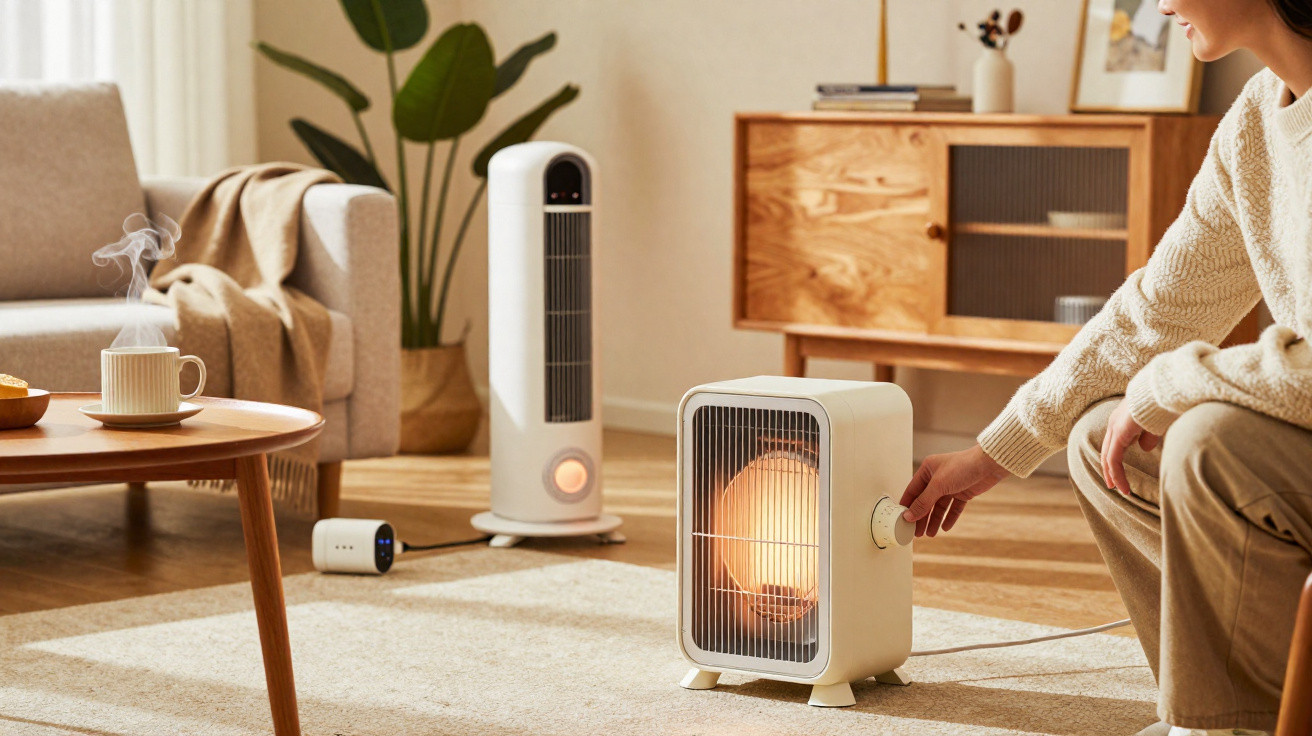
Winter interiors are evolving rapidly, with heating appliances discreetly becoming statement pieces that can compete with your favourite furniture.
Throughout Europe and North America, design-led space heaters are leaving the utility cupboard for centre stage in living rooms. They promise focused warmth, reduced bills and a style that genuinely complements your décor.
Why stylish space heaters are suddenly everywhere
Higher energy costs have prompted many households to reconsider the way they heat their homes. Rather than turning up the central heating, people are warming only the few square metres they are using. This change coincided with manufacturers beginning to design heaters as furniture rather than purely functional hardware.
Today’s space heaters combine technology, safety and visual appeal in a manner that would have seemed improbable a decade ago.
Targeted heating of a single zone can cut energy use, while a well-designed heater doubles as a visual focal point.
Three developments have transformed this new generation of products:
- Improved energy control through ceramic elements, radiant panels and digital thermostats.
- Safer construction, with sturdy bases, tip-over cut-offs and overheat protection now standard.
- Greater focus on appearance: gentle curves, slender profiles, subdued colours and materials inspired by premium furniture.
This latest product wave is particularly relevant to compact homes and rental properties, where every item needs to earn the room it occupies.
A design shift: from ugly necessity to object you actually like
For decades, portable heaters were associated with beige plastic, loud fans and leads you wanted out of sight. That period is disappearing. Taking inspiration from Scandinavian furniture, audio equipment and even sculpture, manufacturers have rethought how a heater can appear.
- Minimal cylindrical heaters in matt black or sand, standing like a compact column lamp.
- Low, horizontal models with wood-effect finishes that resemble TV units and sideboards.
- Radiant panels resembling walls, available in white, clay or forest green to sit alongside paintwork and artwork.
Design-focused heaters now act like a side table, lamp or art piece, instead of an emergency box in the corner.
Beneath this visual redesign is a quieter economic change. By warming one area rather than an entire building, these heaters may reduce the operating time of older boilers or central heating systems. This is significant in poorly insulated properties, which lose heat faster than households can afford to replace it.
Three space heaters reshaping winter comfort
1. The slim ceramic column for small living rooms
One category drawing considerable interest in UK and US interiors is the upright ceramic tower. Often featuring a very small footprint and a rounded, fabric-style grille, it resembles a sound system more than a heater.
- Best for: compact living rooms, studios or open-plan corners.
- Look: a tall cylinder or tower in neutral shades, commonly with touch controls at the top.
- Tech: a ceramic element with oscillation, several power settings and an eco mode.
Ceramic technology warms up quickly, yet may operate at a lower wattage once a room has reached its set temperature. This suits households that work from the sofa, watch television in the evening or spend time in one particular zone rather than throughout the home.
Many current models feature an accurate thermostat alongside a 1–12 hour timer. Together, these features help prevent the familiar mistake of leaving a heater running “just a bit longer” before receiving an unexpectedly high bill.
2. The radiant panel that looks like a piece of furniture
The second option sits nearer the wall and relies on radiant warmth instead of blown air. It heats people and objects directly, producing the soft comfort of sunlight on skin.
- Best for: bedrooms, home offices and reading corners.
- Look: a flat panel, either freestanding on legs or wall-mounted, generally in white, off-white or rich accent colours.
- Tech: an infrared or radiant surface, a digital thermostat, a child lock and tip-over protection on floor-standing versions.
Radiant panels suit people who dislike fan noise and dry, turbulent air and want a calmer, more stable warmth.
As many radiant heaters remain visually understated, they fit effectively behind an armchair, beside a desk or beneath a window. Some manufacturers now supply interchangeable fronts in wood veneer, textured designs or colours coordinated with popular wall paints. This makes people more willing to leave the heater in view rather than conceal it behind curtains or furniture, which also makes it safer.
3. The retro-inspired, portable heater for flexible spaces
This season’s third standout style draws on mid-century radios and enamel stoves. Expect curved edges, short legs, perhaps a carrying handle, and shades such as cream, terracotta, sage and charcoal.
- Best for: renters, students, multipurpose rooms and occasional use.
- Look: compact, mildly nostalgic forms with metal or faux-wood detailing.
- Tech: commonly a fan-assisted system offering two or three power levels, occasionally with a quiet “eco” mode.
Retro-style heaters are seldom intended to heat a large room on their own. Instead, they support the way people move through their routines: breakfast at the kitchen island, several hours at the dining table or a brief warm-up in a guest room.
Their size and weight mean they can be stored easily in a cupboard during spring, while in winter they can remain visible on the floor without conflicting with the room’s wider design.
How to choose the right stylish heater for your home
Alongside appearance, several practical considerations are important for anyone seeking comfort while keeping bills under control.
| Room type | Approx. area | Suggested heater style | Typical power range |
|---|---|---|---|
| Home office | 8–12 m² | Compact ceramic tower or radiant panel under desk | 700–1200 W |
| Bedroom | 10–15 m² | Silent radiant panel or low-noise convector | 1000–1500 W |
| Living room | 18–25 m² | Powerful tower or wide convector with thermostat | 1500–2000 W |
In most modern homes, 2000 W is the maximum practical output for a portable electric heater plugged into a standard socket. Higher power does not necessarily provide greater comfort; an effective thermostat, suitable positioning and sensible operation are often more important.
A heater placed near where you actually sit and work can feel warmer at 1,000 W than a badly located 2,000 W unit.
Key features that really make a difference
- Thermostat and timer: limit continual full-power running and maintain a consistent, comfortable room temperature.
- Safety cut-offs: tip-over shut-off, cool-touch casings and overheat protection lower everyday risk in active households.
- Noise level: particularly important in bedrooms, nurseries and during video calls; radiant models are generally the quietest choice.
- Smart control: Wi-Fi or app-based schedules allow a room to be preheated before you arrive, then switched off after you leave.
Energy, cost and the reality behind “efficient” claims
Nearly every plug-in electric heater turns almost all of its consumed electricity into heat. Genuine savings result from using lower amounts of power for shorter periods and across fewer rooms. For this reason, zoning matters more than claims of “miracle” technology.
A simple rough calculation is useful: in many European countries, one kilowatt-hour of electricity costs roughly the same as a cheap coffee. A 2,000 W heater used for three hours consumes 6 kWh. Use it for several evenings each week through an entire winter, and the total rises quickly.
Smart heaters and units with precise sensors can curb waste by turning off when the room reaches its target temperature or when the app detects that no one is at home. Programmable timers also stop heaters operating throughout the night in children’s rooms and guest spaces.
Style, safety and small risks to keep in mind
Although design has advanced, the essential safety guidance remains unchanged. Cushions, curtains and throws must never come into contact with a heater’s surface. Extension leads may overheat when powering high-wattage appliances, so using a dedicated wall socket is usually the better option.
- Maintain at least 50 cm of clear space around the front and sides of the unit.
- Do not dry clothes directly on the heater casing.
- Inspect leads for damage at the beginning of every season.
- In homes with pets or toddlers, choose stable bases and cool-touch housings.
Portable gas or liquid-fuel heaters introduce ventilation and carbon monoxide risks. This is why many design-led models this year are designed exclusively for indoor electric use.
What this trend says about our homes
The current rise of stylish heaters points to something larger than a seasonal gadget trend. It demonstrates how energy concerns, remote working and interior design culture now converge in one object. A heater that was once hidden in a corner can now reflect how a household lives, spends and unwinds.
For those renting smaller homes, a carefully selected unit can operate almost as a flexible “heat subscription”: warmth moves with you from one room to another without altering the building’s main heating system. Paired with heavier curtains or a straightforward draught check, this modest purchase can transform winter evenings without having to wait for extensive renovation work or a replacement boiler.

Comments
No comments yet. Be the first to comment!
Leave a Comment