
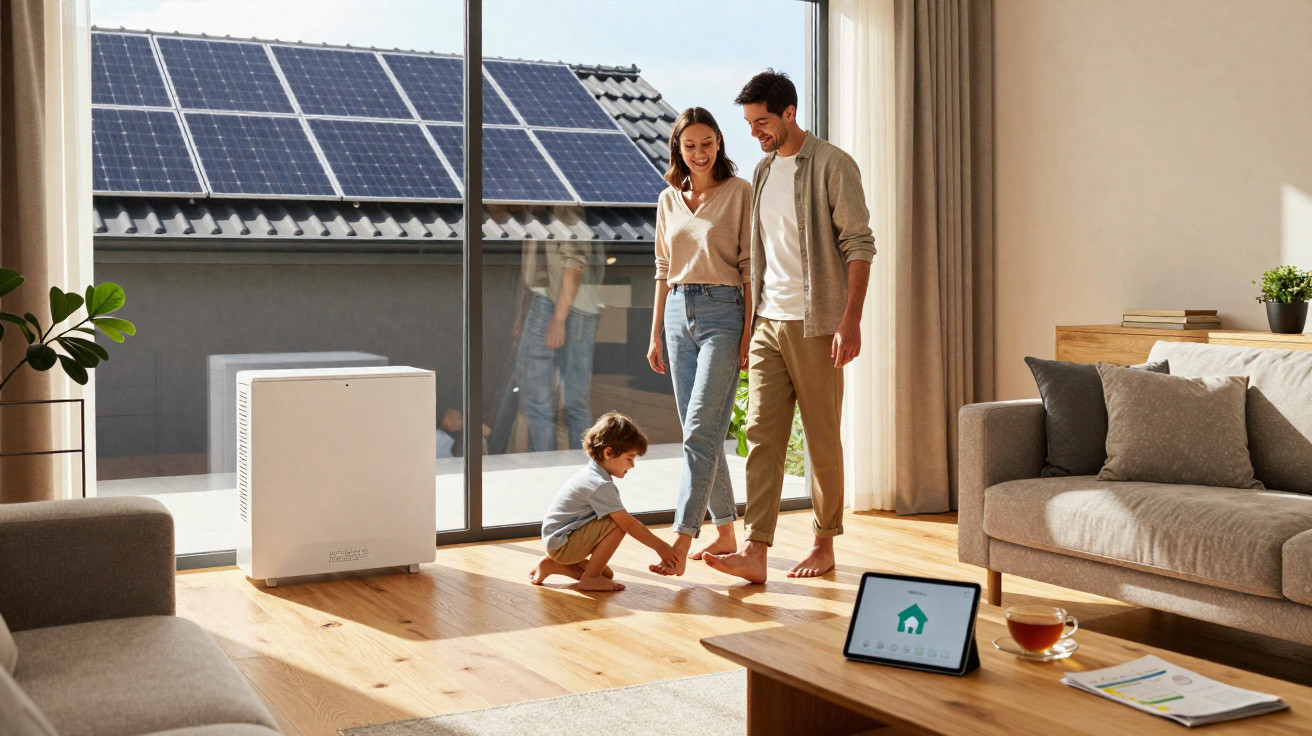
You may already have piled up the throws, turned up the thermostat or shut every door to hold on to a few extra degrees. Yet one option is attracting growing interest: heating your home with energy collected on the roof, rather than relying solely on wall-mounted radiators.
The idea is appealing, but it needs a clear explanation. Solar panels do not magically turn every winter sunbeam into unlimited free heat. They can, however, power efficient equipment that delivers gentle warmth throughout the house and significantly cuts reliance on expensive energy sources.
Why solar heating appeals to so many households
The approach generally relies on photovoltaic panels, which generate electricity from sunlight. That power can run a heat pump, a hot-water cylinder or a precisely controlled electric heating system. The home therefore uses energy generated on site instead of purchasing every kilowatt-hour from the grid.
The phrase “without radiators” may sound surprising, as it does not necessarily mean that heat is produced without any equipment at all. In many installations, warmth is delivered through underfloor heating, heated walls or discreet units built into the property. This removes the need for large visible radiators while providing a more even temperature from floor to ceiling.
What you can genuinely save with this solution
Claims of lower bills can appear striking, sometimes reaching 90%, but no single figure applies automatically to every home. Insulation, roof exposure, location, living area and household habits all have a major effect on the outcome. A poorly insulated house will continue to lose heat, even if it has highly efficient solar panels.
Savings become more compelling when solar electricity powers a heat pump, since it can deliver several kilowatt-hours of heat for each kilowatt-hour of electricity it uses. Part of the required energy can be generated during the day, with heat then stored in a heated floor slab or a hot-water cylinder. This approach reduces energy purchases when sunlight is no longer sufficient, particularly in the evening and during very overcast spells.
Limitations to consider before removing your radiators
Winter presents an obvious challenge: heating demand rises at exactly the time when sunshine levels fall. Photovoltaic panels still operate in cold weather, but their output depends on available light and the orientation of the installation. You should therefore allow for a grid connection, a back-up option or suitable storage to prevent unwelcome surprises during a cold snap.
Upfront costs may also deter some households. Panels, an inverter, a heat pump, underfloor heating and insulation work represent a substantial investment, especially in a refurbishment project. Before proceeding, compare quotations, check whether your home is suitable and work out how long the equipment will take to pay for itself.
A few checks can help you avoid a disappointing project:
- assess the insulation of the roof, walls, windows and floors;
- examine your roof’s orientation, pitch and shaded areas;
- calculate your actual heating requirements over a full year;
- select equipment sized for your floor area and climate;
- plan a back-up solution for the darkest winter days;
- request several costed assessments before signing;
- check which financial support schemes may be available for your circumstances.
How underfloor heating can transform your comfort
Underfloor heating appeals to homeowners because it spreads steady warmth across a large area. Unlike a radiator, which heats one particular spot intensely, it warms the floor and reduces uncomfortable differences between rooms. The result is less harsh heat, with fewer cold areas by windows or in corridors.
This system operates at a low temperature, making it especially well suited to a heat pump partly powered by photovoltaic panels. Thanks to the thermal mass of the slab, it can also retain warmth for several hours after solar production drops. This thermal store offers a practical response to fluctuating bills, provided that insulation and intelligent system controls are not overlooked.
Solar heating does not replace radiators by magic, but it can change the way you use energy. By combining photovoltaic generation, a heat pump, effective insulation and heat distribution through the floor, you can reduce losses and improve comfort. With winters that can be increasingly costly and unpredictable, this option deserves careful assessment rather than a decision made in haste.





Comments
No comments yet. Be the first to comment!
Leave a Comment