
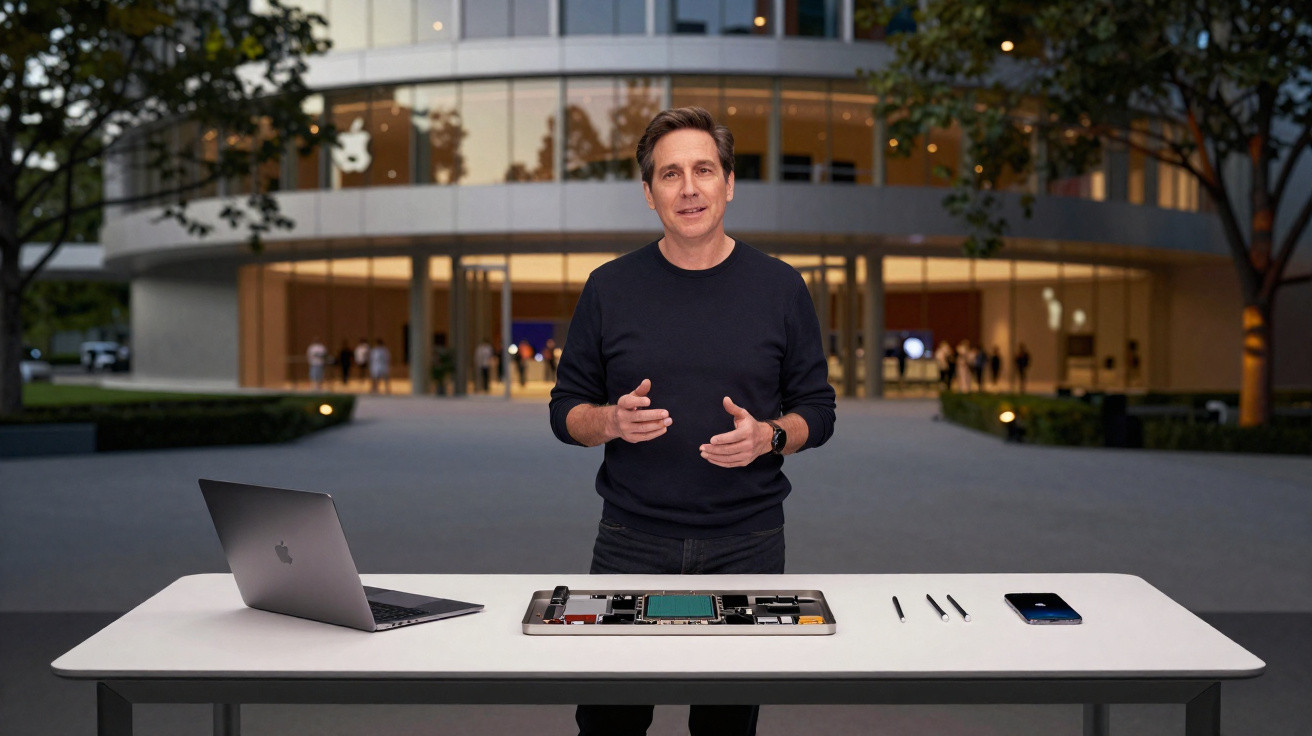
Betting on John Ternus, Apple is preparing to place its future in the hands of an engineer by training, equally comfortable with strategy and product mechanics. Here is a profile of Tim Cook’s designated successor at the helm of the Apple brand.
Having taken over Apple from Steve Jobs in 2011, Tim Cook will step down as chief executive in September. Experts agree that his successor, John Ternus, has every quality needed to lead the Apple brand into a new era.
What was his career path before joining Apple?
Born in 1975, John Ternus is Apple’s current vice-president of hardware engineering. He has never, however, sought the spotlight. Little is known about his childhood or background, yet one fact is clear: from an early age, he developed a taste for work done properly - and for competition. A mechanical engineering graduate of the University of Pennsylvania, he also excelled in the pool, becoming his university’s swimming champion in 1994.
That discipline shaped his approach to work: rigour, perseverance and meticulous precision. Before joining Apple in 2001, he spent four years at Virtual Research Systems, a company specialising in interfaces and virtual reality. It was an ideal testing ground for a future hardware master.
How did John Ternus become one of Cupertino’s hardware mainstays?
When he joined Apple, John Ternus became part of the product design team, the company’s elite engineering group. At first, he worked on external displays for Macs, before soon becoming involved in far more iconic projects, including the iPod. These were products that reshaped Apple’s image, and to which he made a substantial contribution.
Quiet yet exceptionally effective, Ternus rose through the ranks without putting a foot wrong. In 2013, he replaced Dan Riccio as vice-president of hardware engineering, a pivotal role that put him in charge of every hardware team in the company. Eight years later, he was promoted to senior vice-president.
His steady, robust career path perfectly reflects Apple’s philosophy: patience, high standards and excellence. These are precisely the qualities that now make him Tim Cook’s most obvious successor.
Which products and innovations bear his signature?
For more than 20 years, John Ternus has left his mark on almost every flagship Apple product. Under his leadership, the teams have shaped every generation of iPad, along with the iPhone range, including the iPhone Air model, one of the decade’s most significant design overhauls. Macs and AirPods also form part of his remit, with Ternus overseeing each development, from technological innovation to aesthetic refinement.
His greatest achievement, though, is probably the historic transition of Macs to Apple Silicon chips. This technical and strategic turning point enabled the brand to free itself from Intel, increase performance and reduce power consumption at the same time. It was a complete success, praised by both the press and users.
Why is John Ternus the best candidate?
As journalist Mark Gurman, who is usually extremely well informed about developments behind the scenes in Cupertino, explained, Apple was primarily seeking a technologist to succeed Tim Cook: someone able to put innovation back at the heart of its engine. On that front, John Ternus meets every requirement. An engineer by training, he has an in-depth knowledge of the products and understands the subtleties of the integrated ecosystems that are central to the brand’s strength.
At a time when Apple is investing heavily in AI, mixed reality and the connected home, the profile of a hardware specialist appears the obvious choice. At 50, the same age Tim Cook was when he took charge in 2011, Ternus offers a balance between stability and renewal.
Subscribe to Presse-citron
Within the company, his remit has expanded considerably. Ternus no longer simply oversees engineering teams: he now contributes to product strategy and the planning of the future product line-up, a clear indication that he was moving closer to the top.




Comments
No comments yet. Be the first to comment!
Leave a Comment