
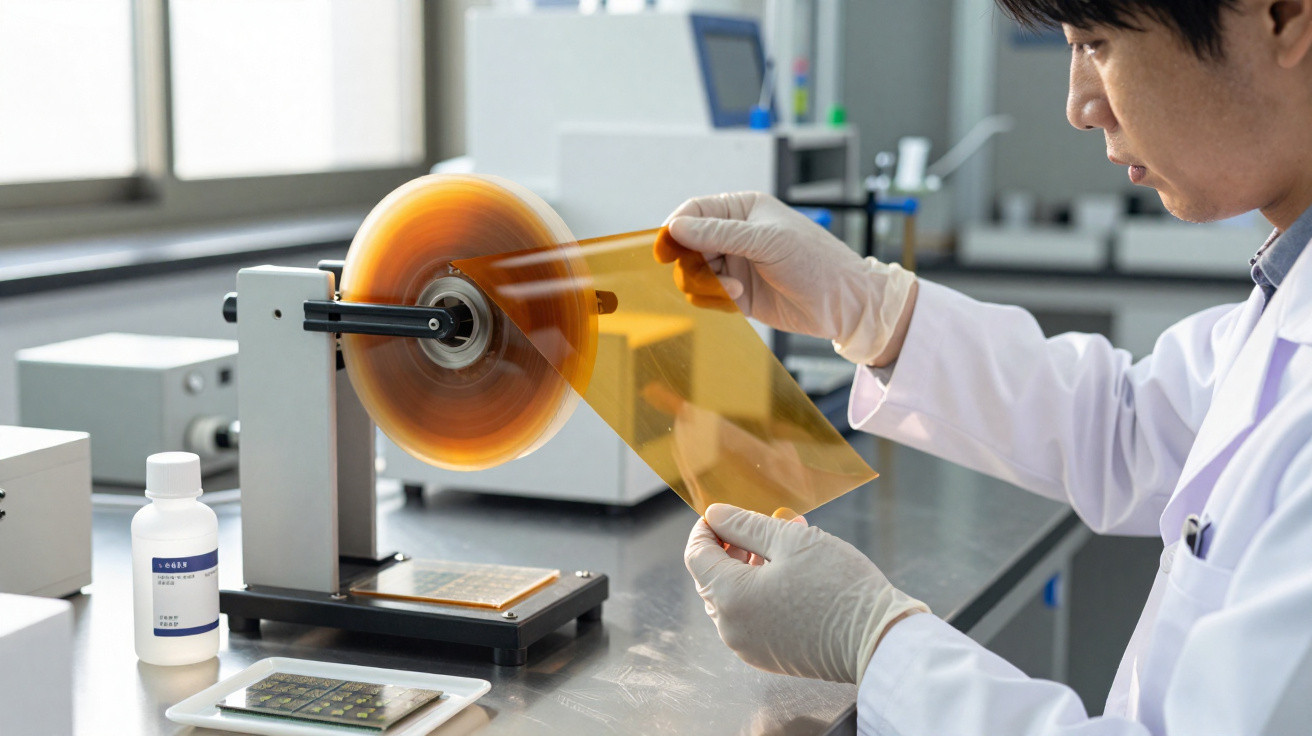
On a grey morning in Tokyo, in an area more associated with office workers than semiconductors, employees in white coats push a steel drum along an immaculate corridor. There are no logos, flashing GPUs or futuristic robots. It is simply an unremarkable Ajinomoto factory - a name most people instinctively associate with instant noodles and umami seasoning.
But the drums contain a material that quietly influences both the speed at which Nvidia-style AI chips can operate and the number that can be produced. It is a beige, decidedly unexciting film: difficult to photograph, unlikely to go viral on TikTok and absent from glossy keynote presentations.
Nevertheless, this modest material has given Japan an almost complete hold over a minute, unseen layer on which every advanced AI chip relies.
Outside the semiconductor sector, few people have even encountered its name.
How a seasoning company came to control the foundations of AI chips
Ask passers-by what Ajinomoto makes and they will probably answer “MSG” or “food additives” before moving on. Its products line supermarket shelves from São Paulo to Singapore, alongside soy sauce and stock cubes. On the surface, it appears to be one of the least AI-related companies imaginable.
Behind its food division, however, is a chemicals and materials operation that patiently established a bottleneck in the semiconductor supply chain. Its overlooked standout product is Ajinomoto Build-up Film, known as ABF.
This film is not intended for food. It sits deep within advanced processors, helping transform delicate silicon wafers into practical, packageable chips by creating ultra-fine wiring layers.
The remarkable point is that, according to most industry estimates, Japanese companies - led by Ajinomoto - account for around 95% of the global market for this vital ABF insulating material. This is not a monopoly on chips or lithography equipment, but on a thin resin film that joins the system together.
Nvidia’s powerful AI-training GPUs, along with high-end Intel and AMD CPUs, depend on sophisticated packaging that cannot be made without materials such as ABF. When ABF supplies become constrained, chip packaging slows. When packaging slows, data centres cannot be completed. That obscure film produced in a Tokyo factory suddenly looks rather like strategic leverage.
Why is one material so important? Picture a modern AI chip as an extremely dense city. Buildings - transistors - can only be made so small before roads - interconnects - become the primary constraint. ABF enables chip manufacturers to construct multiple layers of these “roads” between the silicon die and the outside world, without overheating the system or creating signal interference.
Years ago, Ajinomoto learned how to manufacture the film with smoothness, thermal stability and reliability at microscopic dimensions. Its formulation is intricate, proprietary and honed over decades. It is also closely connected to Japan’s wider expertise in specialist chemicals and precision production.
A rival cannot simply decide one morning to mix resins in a vessel and compete with that capability.
The small film quietly supporting Nvidia’s AI empire
To visualise ABF, ignore the polished chip imagery in Nvidia marketing material. Instead, imagine a pile of exceptionally thin brownish resin layers, each carrying copper traces finer than a human hair. By itself, it appears unremarkable - almost like a sheet of plastic from an office folder.
Within a premium GPU package, however, those layers are crucial. ABF forms part of the substrate, the underlying structure beneath the silicon, where it provides electrical insulation and mechanical support. It maintains clean signals at dauntingly high speeds while an AI model processes billions of parameters.
Without this stability, chips could malfunction, overheat or be impossible to package in the first place.
The scale becomes striking on closer inspection. A leading-edge GPU package may contain thousands of microscopic links between the silicon die and the wider system. Every one of them runs through substrate layers that rely on ABF.
In the early 2000s, before smartphones had become commonplace, Ajinomoto recognised that semiconductor packaging was about to become far more complex. The company discreetly applied expertise developed in food chemistry and amino acids to high-performance resins. In time, major manufacturers including Intel adopted ABF substrates as a standard for their most advanced processors.
Move forward to the AI boom, and Nvidia requires increasing numbers of these packages to serve power-hungry data centres. Ajinomoto’s “hidden ingredient” could no longer be replaced quickly.
The explanation for this position is almost mundane, which is exactly why it is so durable. ABF materials must withstand high temperatures, avoid distortion, maintain a consistent dielectric constant and survive punishing manufacturing processes. Even a minute flaw can destroy a chip package worth thousands of dollars.
Approving an alternative supplier is a difficult and lengthy undertaking. Chip companies conduct tests over years rather than months, and a change can threaten yields on production lines worth billions of dollars. The industry therefore tends towards the supplier with the longest record, most dependable chemistry and strictest quality control.
That supplier is Ajinomoto. While global attention focused on eye-catching chip designs, Japan steadily strengthened the base beneath them.
Can the world manage without Japan’s near-monopoly on ABF?
For a chip company today, moving away from ABF is not comparable to replacing a cloud provider. The workable approach is gradual: qualify secondary suppliers, create ABF-like materials and redesign packaging carefully over time.
Companies in Taiwan, South Korea and the United States are competing to develop substitute build-up films and alternative substrate designs. Some are testing glass substrates or advanced organic materials in an effort to lessen dependence on conventional ABF.
Yet this resembles replacing an aircraft’s wings while it is airborne and already carrying a full load of AI workloads.
Investors occasionally discuss “single points of failure” as though businesses can solve them with a simple strategic decision. In practice, supply chains have momentum, and engineers seldom risk a wholesale change of materials when a minor problem could ruin an entire generation of chips.
Most people have experienced the moment of discovering that a dull, unglamorous dependency quietly governs an entire project. AI hardware is experiencing that realisation on an industrial scale.
In truth, almost no one rebuilds an entire packaging stack unless a crisis leaves no alternative.
For those working in the sector, the position is both compelling and a little unsettling. Japan’s nearly 95% hold on ABF-type films is not a formal embargo, but it is a structural fact. Should production be disrupted by an accident, trade tensions or environmental rules, the consequences would feed directly into Nvidia’s roadmap and the cloud providers dependent on it.
“ABF is like oxygen for advanced packaging,” a semiconductor materials engineer told me recently. “You don’t think about it when it’s there. You think about nothing else when it’s not.”
- Watch the quiet layers - Real leverage often lies in unseen materials rather than headline-grabbing chips.
- Follow capacity expansions - Ajinomoto’s additional ABF production lines offer early indications of future AI chip supply.
- Track alternative materials.
- Recognise geopolitical risk - Concentrating supply in a single country always has strategic significance.
- Expect slow change - Replacing a mature material ecosystem takes years, even under pressure.
What this hidden bottleneck reveals about the future of AI power
The more closely the AI boom is examined, the more it appears to depend on invisible links. Discussion tends to focus on trillion-parameter models, GPU shortages and energy-intensive data centres. Further down the chain, in cleanrooms and chemical vessels, the entire system relies on a small number of specialist materials made by companies absent from product launches.
Japan’s ABF dominance is one such quiet turning point. It demonstrates how industrial depth - decades of chemical research and development, unexciting quality assurance and relentlessly consistent manufacturing - can become a strategic advantage when the world enters a new computing era. A film developed in a food company’s chemistry laboratory came to influence the rate of global AI deployment.
Will competitors close the gap? Almost certainly. Will that process be rapid, painless and free of conflict? Almost certainly not.
Somewhere between a steel drum in Tokyo and a GPU inside a cloud server, AI’s future is being determined in layers that the public does not see.
| Key point | Detail | Value for the reader |
|---|---|---|
| Japan’s ABF near-monopoly | Ajinomoto and peers supply ~95% of key build-up film for advanced chip packaging | Helps explain why AI chip supply is fragile and geopolitically sensitive |
| ABF as an invisible bottleneck | Critical to Nvidia-style GPU substrates, signal integrity, and yield | Shows that AI power isn’t just about chip design, but about hidden materials |
| Slow path to diversification | Alternative materials and suppliers face long qualification cycles and technical risk | Signals that supply tensions and price swings around AI hardware may persist |
FAQ:
- Question 1 What exactly is Ajinomoto Build-up Film (ABF)? ABF is a high-performance resin film used in semiconductor substrates. It provides electrical insulation and a foundation for ultra-fine copper wiring layers that link the silicon chip with the outside world.
- Question 2 Why does Japan control about 95% of this market? Japan, led by Ajinomoto, devoted decades to improving specialist resins, process consistency and mass production. That early lead, together with chipmakers’ demanding quality requirements, established long-term dominance.
- Question 3 Can Nvidia and others simply switch to another material? They can investigate alternatives, and some are doing so, but changing materials is slow and risky. New options must be qualified, tested and incorporated into complicated packaging processes, which may take years.
- Question 4 Does this give Japan political leverage over the AI industry? Not as openly as export controls on lithography machines do, but the concentration of ABF production in Japan creates a structural dependency that companies and governments monitor quietly.
- Question 5 Should ordinary users or investors care about ABF? If AI chip prices, availability or the pace of new GPU launches matter to you, then yes. This little-known material sits upstream of all the hardware powering today’s generative AI boom.






Comments
No comments yet. Be the first to comment!
Leave a Comment