
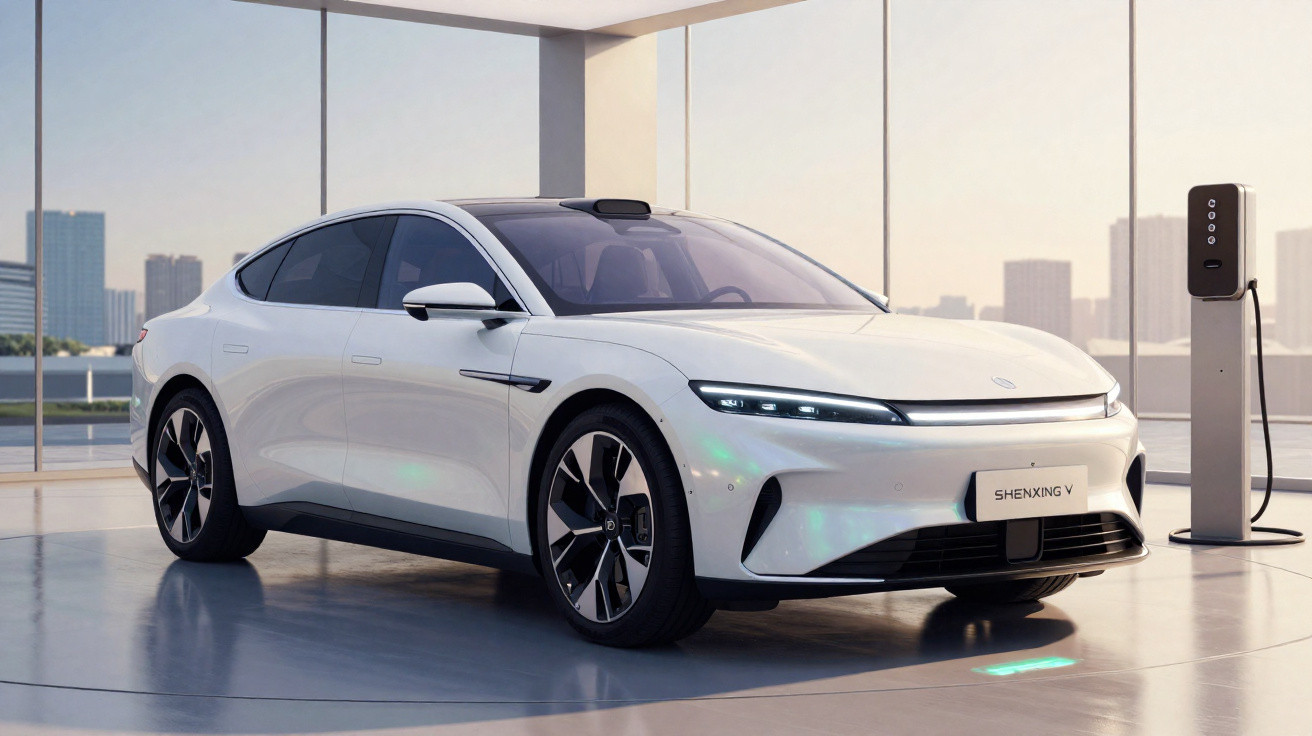
CATL, the Chinese company that is the world’s largest battery manufacturer and one of Tesla’s leading suppliers, announced on Wednesday, 16 August, a new fast-charging LFP battery. According to the company, it is the first of its kind to achieve this capability.
Named Shenxing, the new CATL battery is set to enter mass production at the end of the year. The first electric vehicles fitted with this battery type are expected to arrive in the first quarter of 2024.
“We hope that, through continued efforts to improve technology and reduce costs, Shenxing will become a standard product available for all electric vehicles,” Gao Han, chief technology officer of CATL’s electric vehicle division, told Reuters.
CATL leads the global electric-car battery market, holding a 35% market share in the first quarter of 2023, according to figures from SNE Research.
CATL Shenxing fast-charging LFP battery
Drawbacks of LFP batteries overcome
Increasingly regarded as an alternative to NCM lithium-ion batteries - which use nickel, cobalt and manganese and are still employed by most European manufacturers - LFP lithium-ion batteries, based on lithium iron phosphate, have long been used by Chinese car makers such as BYD.
There are further examples, including Tesla, which uses this technology in entry-level versions of the Tesla Model 3 and Model Y. Ford has also confirmed that it will use these batteries in the Mustang Mach-E.
One of the main advantages of LFP batteries is their cost. Their use of more readily available and abundant materials makes them cheaper than NCM batteries, which depend on more expensive, scarcer and less sustainable materials.
They also have a longer life cycle than NCM batteries, along with greater thermal and chemical stability, reducing the risk of fires and explosions.
However, compared with the more expensive conventional NCM batteries, they also have drawbacks. Their energy density is lower - meaning less capacity per cell and, consequently, a shorter driving range - while charging is less efficient, particularly at lower temperatures.
CATL’s new fast-charging technology now makes it possible to remove the range and charging-speed disadvantages from the equation.
The company promises a range of more than 700 km under the CLTC cycle used in China, which is less demanding than the WLTP cycle. It also says that 10 minutes of charging will provide 400 km of range.
CATL further states that it will be possible to restore 80% of the range in just 30 minutes at temperatures as low as -10 ºC. It also promises that performance and acceleration will not be compromised in such conditions.
Will the price be affected?
On paper, CATL’s new technology appears highly promising and, in theory, addresses the two main disadvantages of LFP batteries.
The remaining question is how this development will affect the price of LFP batteries, whose lower cost is their main selling point. It is worth noting that the cost per kWh of an LFP battery is currently between 20% and 30% lower than that of an NCM battery.
However, CATL has not yet commented on the price at which Shenxing batteries will reach the market.





Comments
No comments yet. Be the first to comment!
Leave a Comment