
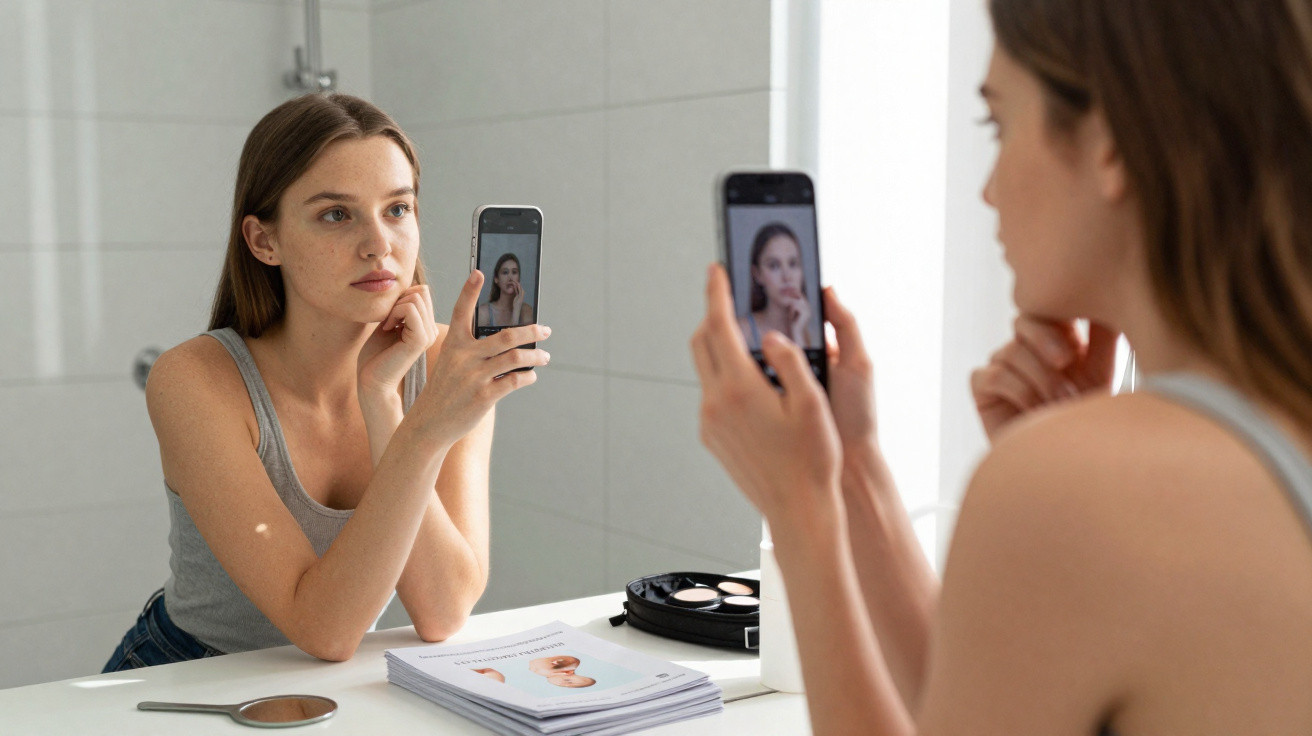
Digital images, beauty filters and body image
Digital filters, edited photographs and artificial intelligence tools are changing how many people view their own bodies. Frequent exposure to digitally altered faces and bodies creates standards that are difficult to attain in real life, intensifying the debate over how comparison affects self-esteem and decisions about cosmetic procedures.
Marco Dallegrave, a doctor and plastic surgeon with postgraduate training in Psychiatry and a member of the Brazilian Society of Plastic Surgery, says that assessing surgery should involve more than the physical feature causing concern; the source of that wish must also be considered.
“Today, comparison does not happen only with other people, but with selected images, filters, angles and edits. When a digital reference starts to define how someone believes they should look, it can affect the way they see their own body and the expectations they bring to the consultation,” says Marco Dallegrave.
Comparison can affect body perception
The widespread use of beauty filters has created a new relationship with personal image. Features that modify skin, the nose, eyes, jawline and facial proportions have become part of the daily routine for millions of users, while artificial intelligence tools can generate versions that are even closer to an idealised appearance.
The study “Associations between TikTok facial filter use and body image variables”, published in the scientific journal Body Image in 2025 and conducted with 397 university students who use TikTok, found an association between the use of appearance-enhancing facial filters and higher levels of facial dissatisfaction and concern about body image. The researchers noted that the findings point to a relationship between these factors, but do not prove a direct cause.
According to Marco Dallegrave, the main concern arises when a digital image stops being inspiration and begins to serve as an expected outcome. “A modified photograph can provide a visual reference, but it does not represent a realistic possibility of replication. Each person has their own skin characteristics, bone structure, fat distribution and body proportions,” he explains.
The specialist stresses that seeking aesthetic changes does not necessarily mean someone has a negative relationship with their appearance. Attention is needed when dissatisfaction becomes ongoing, shifts from one body area to another, or when a person believes surgery will solve emotional, professional or social issues.
“There is a difference between improving something that genuinely bothers you and trying to keep up with a standard that changes according to trends. No procedure can resolve a permanent comparison with images that are constantly altered,” the plastic surgeon points out.
Plastic surgery and realistic expectations
When surgery may not be the best choice
Before recommending a procedure, the medical assessment considers factors such as the history of dissatisfaction, expectations of the outcome and an understanding of surgery’s limitations. For Marco Dallegrave, the surgeon’s role also includes advising patients when intervention is not the most appropriate route.
“Not every desire for change needs to result in surgery. When expectations do not match what the procedure can deliver, or when the issue raised extends beyond a physical characteristic, the most responsible decision may be not to operate,” he says.
Plastic surgery can support wellbeing when there is a medical indication and expectations are compatible with what the procedure can achieve. In the specialist’s view, the relationship people have with their own image has taken on a new dimension under the influence of social media and digital tools.
“The aim should not be to leave surgery looking like what repeatedly appears on a screen. Beauty also involves how a person sees and respects themselves, and understands their own worth. Surgery can alter physical characteristics, but it should not bear responsibility for anyone’s self-esteem or happiness,” says Marco Dallegrave.
According to the plastic surgeon, “when there is clarity about what a person truly wants and what comes from external pressure, the decision becomes more conscious. Transformation may happen on the outside, but the relationship with one’s own image needs to be built from the inside out,” he concludes.
By Carolina Lara






Comments
No comments yet. Be the first to comment!
Leave a Comment